

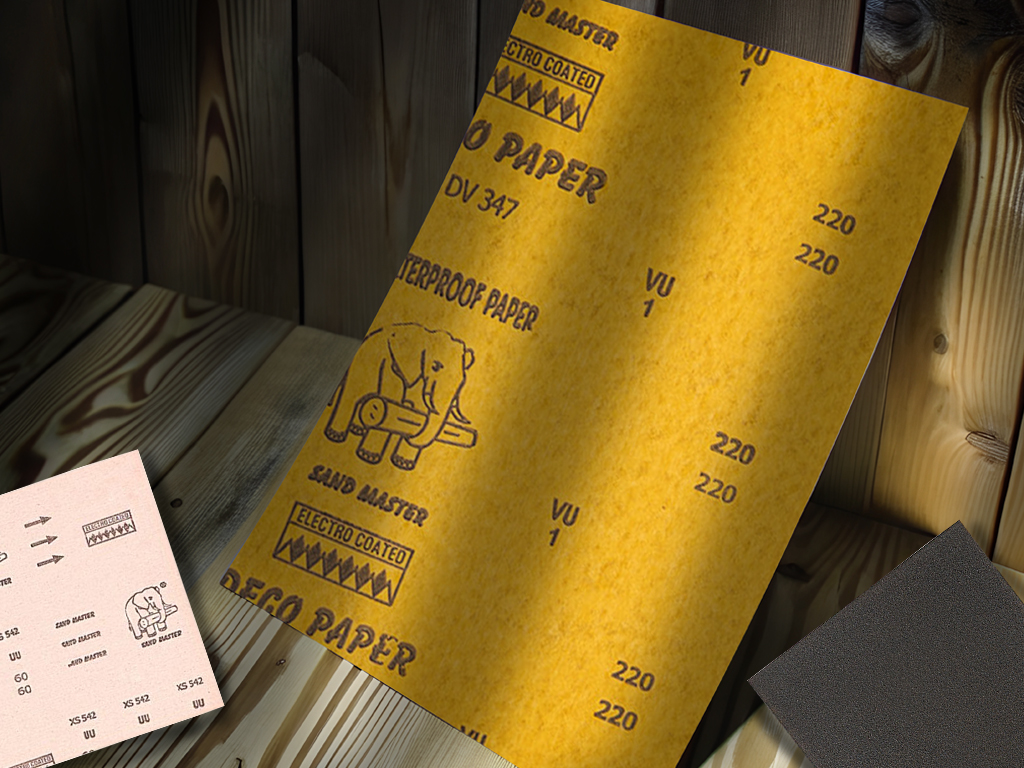
Smooth walls and polished woodwork start with the right sandpaper. Whether you’re prepping interior walls for painting, refinishing furniture or smoothing plaster, choosing the correct sandpaper makes all the difference.
With so many options (dry, waterproof, latex-backed and dozens of grit levels), it can be tricky to decide which sandpaper suits your project. This guide explains how to pick the right one for each surface and which professional-grade sheets from CUMI Abrasives, part of the 124-year-old Murugappa Group, fit each job.
Quick answer: For walls and putty, sand with 100–180 grit to level and 220–320 grit before painting. For wood, start at 60–100 to remove old finish, move to 120–180, and finish at 220 or finer. For plaster and POP, stay in the 120–220 range to avoid gouges. Use aluminium oxide sheets like CUMI Ajax Sukha Plus for dry sanding, and silicon carbide waterproof sheets for wet sanding with less dust.
1. Understanding the Role of Sandpaper in Finishing
Sandpaper does more than smooth a surface. It:
- Removes imperfections, bumps and old coatings
- Controls how much primer and paint the surface absorbs
- Defines the final look and texture of wood and wall surfaces
The wrong sandpaper causes uneven sanding or surface damage, so it’s worth understanding grit, backing and abrasive type before you buy.
2. Sandpaper by Surface Type
a) Wall Sanding
Walls, especially putty-based or plaster-based surfaces, need sandpaper that gives a fine, even finish.
- Use medium grits (100–180) to level filler or old paint
- Use fine grits (220–320) for a smooth surface before painting
- Choose silicon carbide waterproof paper for wet or dry sanding with longer life and minimal dust, or aluminium oxide paper such as CUMI Ajax Sukha Plus Sheet for dry sanding
b) Wood Sanding
Wood surfaces need progressive sanding:
- Start with coarse grits (60–100) to remove old finishes
- Move to medium grits (120–180) for shaping and smoothing
- Finish with fine to super fine grits (220–600) before polishing or varnishing
Aluminium oxide papers like Ajax Sukha Plus work well for dry sanding wood. For lacquered or PU-coated wood, a stearated sheet resists clogging. For furniture-specific advice, see our guide on how to choose sandpaper for wood furniture.
c) Plaster, POP & Drywall Sanding
Plaster, POP (plaster of Paris) and drywall joints need a clog-resistant abrasive with a consistent grit.
- Use 120–220 grit to smooth joints, patches and putty
- Avoid ultra-coarse paper, which gouges soft plaster
- Choose waterproof paper when wet sanding to control dust
3. Types of Sandpaper Backing
| Backing Type | Best For | Advantages |
|---|---|---|
| Paper-backed | Light sanding, walls, putty | Flexible, economical |
| Cloth-backed | Heavy-duty jobs, curved wood | Tear-resistant |
| Waterproof (Latex) | Wet sanding | Long-lasting, flexible for contour sanding |
| Adhesive / Hook & Loop | Power tools or sanding pads | Easy to fit and replace |
CUMI’s range of waterproof sheets, latex sheets, hook & loop discs and abrasive rolls covers all of these.
4. Choosing the Right Grit
Grit size determines how aggressively sandpaper cuts. The lower the number, the coarser the paper.
| Grit Range | Result | Use Case |
|---|---|---|
| 40–80 | Coarse | Paint removal, rough sanding |
| 100–180 | Medium | Smoothing walls, furniture shaping |
| 220–400 | Fine | Wall prep before painting |
| 600–1000 | Very Fine | Polishing and finishing |
When in doubt, start coarse and move to finer grits gradually.
5. Sandpaper Grit Chart: Walls vs Wood vs Plaster
| Job | Walls & Putty | Wood | Plaster / POP |
|---|---|---|---|
| Remove old paint or finish | 80–120 | 60–100 | 120 (light only) |
| Level and smooth | 100–180 | 120–180 | 120–180 |
| Final pass before primer, paint or stain | 220–320 | 220–320 | 180–220 |
| Polishing / between coats | 320–400 (wet) | 320–600 | — |
For a full reference across every grit grade, see our complete guide to sandpaper types.
6. Which CUMI Sandpaper to Use for Each Surface
| Surface / Job | Dry Sanding | Wet Sanding | Power Sanding |
|---|---|---|---|
| Wall putty and painted walls | Ajax Sukha Plus Sheet, Sand Master Sheet | Ajax Waterproof Sanding Sheet, Jawan Waterproof Sheet | Jawan 5-Hole Hook & Loop Disc |
| Plaster and POP | Ajax Sukha Plus Sheet, Appu Sukha Sheet | CUMI Latex Sheet, Jawan Latex Sheet | — |
| Bare wood and furniture | Sand Master Sheet, Concord Roll | ShineLine Wet & Dry Sheet | Concord Paper Hook & Loop Discs FP 567 |
| PU-coated and lacquered wood | CUMI Stearated Sheet | ShineLine Premium Latex Sheet | — |
Buying for a painting crew, contractor team or dealership? Browse all CUMI sanding sheets or download the CUMI catalogue.
7. When to Use Waterproof or Wet Sandpaper
Wet sanding gives a smoother, glossier finish and cuts down on dust. Choose silicon carbide waterproof papers for:
- Putty or painted surfaces
- Final finishing before a topcoat
- Polishing wood, walls or metal
Wet sanding also extends paper life, because water flushes away the debris that would otherwise clog the sheet.
8. Tips for Best Results
- Replace worn-out sheets for consistent results
- Always sand with even pressure
- For large areas, use sanding blocks or orbital machines
- Clean surfaces thoroughly before painting or staining
9. Also Cutting Walls? Choose the Right Wall Cutting Blade
Wall preparation often involves more than sanding. Electricians and contractors chase walls for conduits and cut openings for switchboards before the putty and paint go on. Sandpaper won’t do that job; you need a diamond wall cutting blade.
| Job | CUMI Blade |
|---|---|
| Wall chasing in brick and concrete | Speed 500 Wall Specialist Cutting Blade |
| General-purpose cutting of brick, concrete and stone | Speed Diamond Segmented Saw, Tezz All Rounder Diamond Segmented Saw |
Not sure which blade type fits your wall? Read TCT vs Diamond Blades for Wall Cutting: Which One Should You Buy? or browse all CUMI cutting blades.
Conclusion
From walls to wood, the right sandpaper saves time and effort and delivers professional-quality finishes. Whether you need wall sanding paper, waterproof abrasive paper or super fine sandpaper for wood, CUMI Abrasives offers a range built for performance and durability.
Need sandpaper for your next site or workshop job? Call 1800 3000 1131, request a quote, explore the complete CUMI sandpaper collection, or download the catalogue.
Frequently Asked Questions
1. What is the best sandpaper for plaster walls?
For plaster walls, use medium grits like 100–180 to level filler or old paint, then fine grits like 220–320 to refine the surface before painting. CUMI’s silicon carbide waterproof sheets and aluminium oxide papers such as Ajax Sukha Plus give an even, professional finish on plaster walls.
2. What grit sandpaper should I use for plaster?
Start with 100–180 grit for general plaster levelling and to remove minor imperfections, bumps or old coatings. Move to 220–320 grit for final smoothing before primer or paint, so the finish is uniform and paint absorption is even.
3. What grit sandpaper is best for sanding interior walls before painting?
For most interior walls, use 100–180 grit to smooth putty or old paint, then 220–320 grit for a fine, paint-ready surface. This progression removes surface defects without leaving deep scratches that show through the final coat.
4. Which sandpaper is best for wall putty sanding?
Wall putty is best sanded with medium to fine grits in the 120–220 range to flatten high spots and blend repaired areas. CUMI’s silicon carbide waterproof sheets work well for wet sanding putty, which reduces dust and improves the finish.
5. What sandpaper number should I use for wall sanding?
Use 100–180 grit for general wall sanding, such as levelling filler, joint compound or old paint. Switch to 220–320 grit for the last pass before primer or topcoat to get a smooth, even texture.
6. What type of sandpaper is best for walls and plaster surfaces?
For walls and plaster, choose silicon carbide waterproof paper for wet or dry sanding when you want longer life and less dust. For dry sanding, aluminium oxide papers like CUMI Ajax Sukha Plus cut consistently and last well on wall and plaster surfaces.
7. What is the best grit for sanding walls to remove old paint and smooth rough areas?
To remove old paint and rough areas, start with 80–120 grit depending on how heavy the coating is. Once the surface is level, move up to 150–220 grit to refine the texture and prepare it for primer or fresh paint.
8. Which sandpaper should I use on plaster walls to avoid scratches and gouges?
Avoid very coarse grits on plaster. Use 120–220 grit for most plaster sanding, and finish with 220–320 grit. Wet sanding with silicon carbide waterproof sheets helps give a smooth, scratch-free plaster surface.
9. Is sanding mesh good for plaster walls compared to normal sandpaper?
Sanding mesh resists clogging and works well with vacuum-backed tools, especially on joint compound. However, quality abrasive papers from CUMI, particularly waterproof silicon carbide sheets, offer excellent cut, flexibility and finish when used correctly on plaster.
10. What sandpaper size and grit are recommended for wall putty sanding before painting?
Standard sheets that fit sanding blocks or pads are the most convenient for wall putty, typically in 120–220 grit. CUMI waterproof or Ajax Sukha Plus sheets in these grits level putty smoothly and leave a uniform, paint-ready surface with minimal dust and longer sheet life.
11. What is sandpaper called in Hindi?
Sandpaper is called रेगमाल (regmal) in Hindi, and many shops also simply call it sand paper. Coarse paper is often called मोटा रेगमाल and fine paper बारीक रेगमाल. Always mention the grit number when buying.
12. Can I use sandpaper to cut or chase a wall?
No. Sandpaper only smooths surfaces. To chase walls for wiring or cut openings in brick and concrete, use a diamond wall cutting blade such as the CUMI Speed 500 Wall Specialist, then sand the patched putty smooth afterwards.
About the Author
This article was prepared by the CUMI Abrasives technical team, part of the Murugappa Group, a manufacturing conglomerate with more than a century of experience in materials engineering and industrial abrasives. CUMI’s sanding sheets are used daily by painters, contractors, carpenters and furniture manufacturers across India.
CUMI Abrasives – Carborundum Universal Limited Dare House Extension, 4th Floor, 234, NSC Bose Road, Chennai, Tamil Nadu 600001, India Customer Support: +91-8035120000 Sales: +91-7845121555