

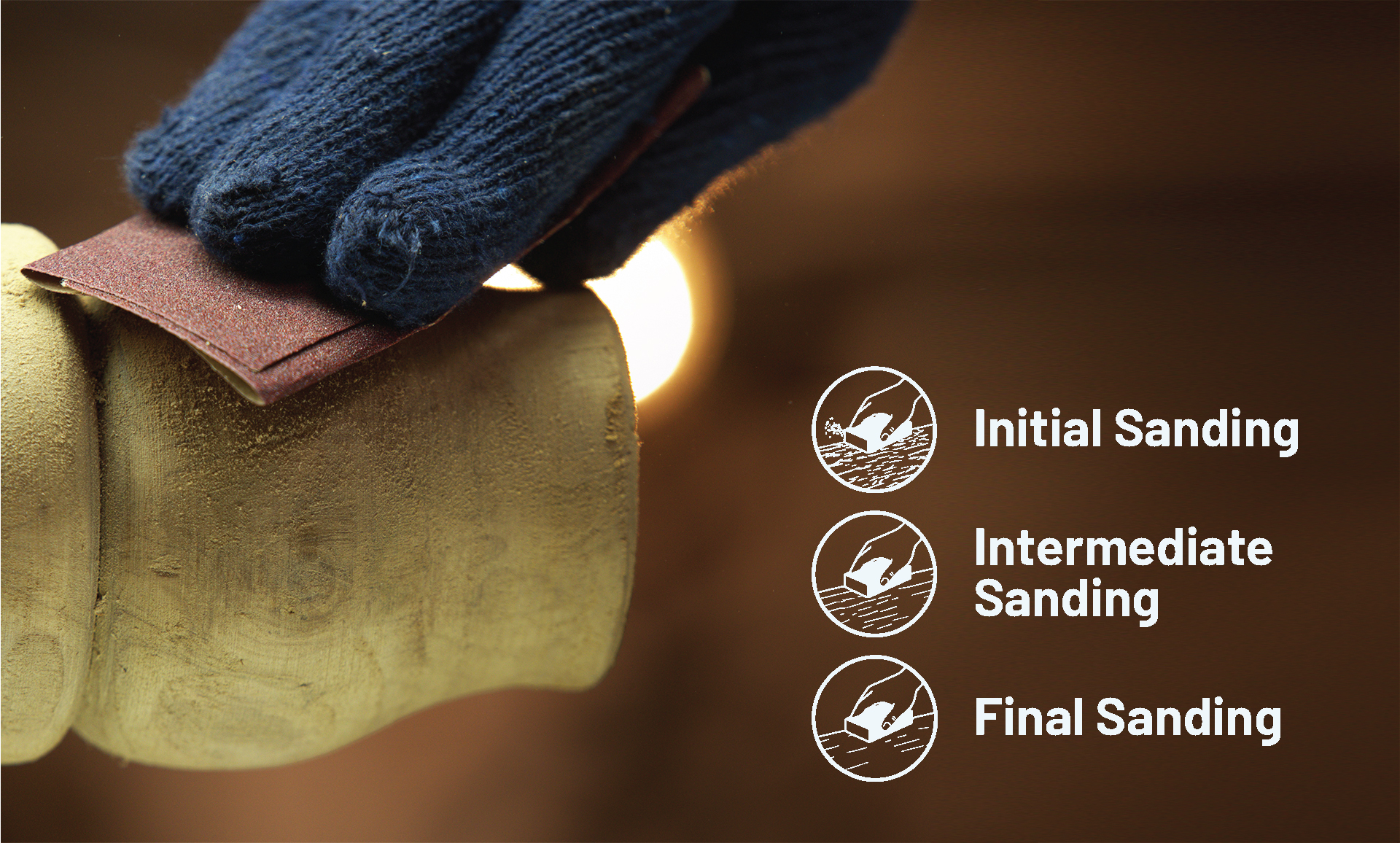
Sandpaper selection directly affects how efficiently old finishes are removed and how smooth the final wood surface becomes. How to Choose Sandpaper that ensures controlled material removal while preserving the natural grain of the wood.
Furniture restoration involves multiple sanding stages, and each stage requires a specific grit and abrasive behavior. Improper selection can lead to visible scratches, uneven surfaces, and poor coating adhesion.
Understanding how grit, abrasive material, and coating type work together helps achieve consistent finishing results.
Sanding Stages in Furniture Refinishing
Furniture refinishing follows a progressive sanding approach where each stage prepares the surface for the next.
Initial Sanding (Finish Removal)
Coarse abrasives are used to remove paint, varnish, or lacquer coatings and expose the wood surface.
Intermediate Sanding (Surface Leveling)
Medium grit abrasives smooth the wood surface and remove scratches left by coarse sanding.
Final Sanding (Surface Preparation)
Fine grit abrasives prepare the wood for staining, polishing, or painting by refining the surface.
Each stage plays a role in achieving a smooth and uniform finish.
Recommended Grit Progression for Wood Restoration
Selecting the correct grit sequence ensures that scratches from previous sanding stages are removed effectively.
Grit Range | Purpose | Application |
60–80 | Coating removal | Removing varnish or paint |
100–120 | Surface leveling | Smoothing exposed wood |
150–180 | Scratch refinement | Removing sanding marks |
220–320 | Final finishing | Preparing for stain or paint |
Skipping grit stages may result in visible scratches after finishing.
Sanding performance depends not only on grit range but also on how abrasives are structured and applied across the sanding surface.
Choosing the Right Abrasive Material for Wood Sanding
Abrasive material influences cutting efficiency and finish quality during sanding.
Aluminum oxide abrasives are commonly used in woodworking because they provide durability and consistent cutting performance. They are suitable for extended sanding operations and general surface preparation.
Silicon carbide abrasives are sharper and produce finer scratch patterns, making them useful in finishing stages or between coating layers.
Abrasive material selection plays a critical role in determining sanding efficiency and surface quality across different stages.
➡ abrasive material selection in sandpaper
Open Coat vs Closed Coat Sandpaper in Wood Applications
The coating structure of sandpaper affects clogging behavior and sanding efficiency.
Open-coat sandpaper has spaced abrasive grains that reduce clogging, making it suitable for wood and resinous materials. Closed coat sandpaper has dense grain coverage, providing faster material removal but increasing the risk of loading.
In woodworking applications, selecting the right coating structure helps maintain consistent sanding performance and reduces surface loading.
➡ Open-coat vs. closed-coat sandpaper differences
Selecting Sandpaper for Different Furniture Surfaces
Different furniture surfaces require specific sanding approaches based on material and finish condition.
- Solid wood surfaces require progressive sanding to preserve grain structure
- Veneer surfaces require lighter sanding to avoid damage
- Painted furniture requires coarse sanding for coating removal followed by finer finishing
Choosing the correct sanding approach ensures uniform surface preparation across different furniture types.
Practical Sanding Workflow for Furniture Restoration
A structured sanding workflow improves efficiency and finishing consistency.
- Start with coarse grit for removing existing coatings
- Progress through medium grit for surface leveling
- Finish with fine grit for surface preparation
- Clean the surface between sanding stages
Incorrect sanding techniques or skipping stages can lead to uneven finishes and surface defects during restoration.
➡ Common sanding mistakes in woodworking
Recommended Sandpaper for Furniture Refinishing
Selecting the right sandpaper product improves sanding efficiency and consistency.
Open coat sandpaper is commonly used in woodworking applications where clogging needs to be minimized and consistent cutting performance is required.
➡ Open coat sandpaper for woodworking applications
For broader sanding requirements across different surfaces:
➡ Sandpaper for surface preparation and finishing
Expert Insight: Why progressive sanding improves finishing quality
Professional furniture restoration relies on progressive sanding because each grit removes the scratch pattern created by the previous stage. This ensures that the wood surface becomes smoother without damaging the grain structure.
Using appropriate abrasive materials and coating types further improves sanding efficiency and reduces the risk of surface defects.
This approach is widely used in woodworking and finishing applications to achieve consistent and durable results.
Quick Reference: Sandpaper Selection for Furniture Refinishing
Task | Recommended Grit | Sandpaper Type |
Paint removal | 60–80 | Closed coat |
Surface leveling | 100–150 | Open / Closed coat |
Scratch removal | 150–180 | Open coat |
Final finishing | 220–320 | Open coat |
Quick Summary
Sandpaper selection in furniture refinishing depends on grit progression, abrasive material, and coating structure.
- Coarse grits remove coatings and prepare surfaces
- Medium grits smooth the wood
- Fine grits prepare surfaces for finishing
- Open coat sandpaper reduces clogging in wood applications
- Closed coat sandpaper improves material removal efficiency
Selecting the right combination of sandpaper improves sanding efficiency, surface quality, and finishing consistency.
About the Author
This article was prepared by the CUMI Abrasives technical team, part of Carborundum Universal Limited, a Murugappa Group company with expertise in abrasive manufacturing and surface preparation technologies.
The insights presented are based on practical applications across woodworking, furniture restoration, and industrial finishing processes.
CUMI Abrasives – Carborundum Universal Limited
Dare House Extension, 4th Floor, 234, NSC Bose Road, Chennai, Tamil Nadu 600001, India
Customer Support: +91-8035120000
Sales: +91-7845121555
Email: [email protected]