

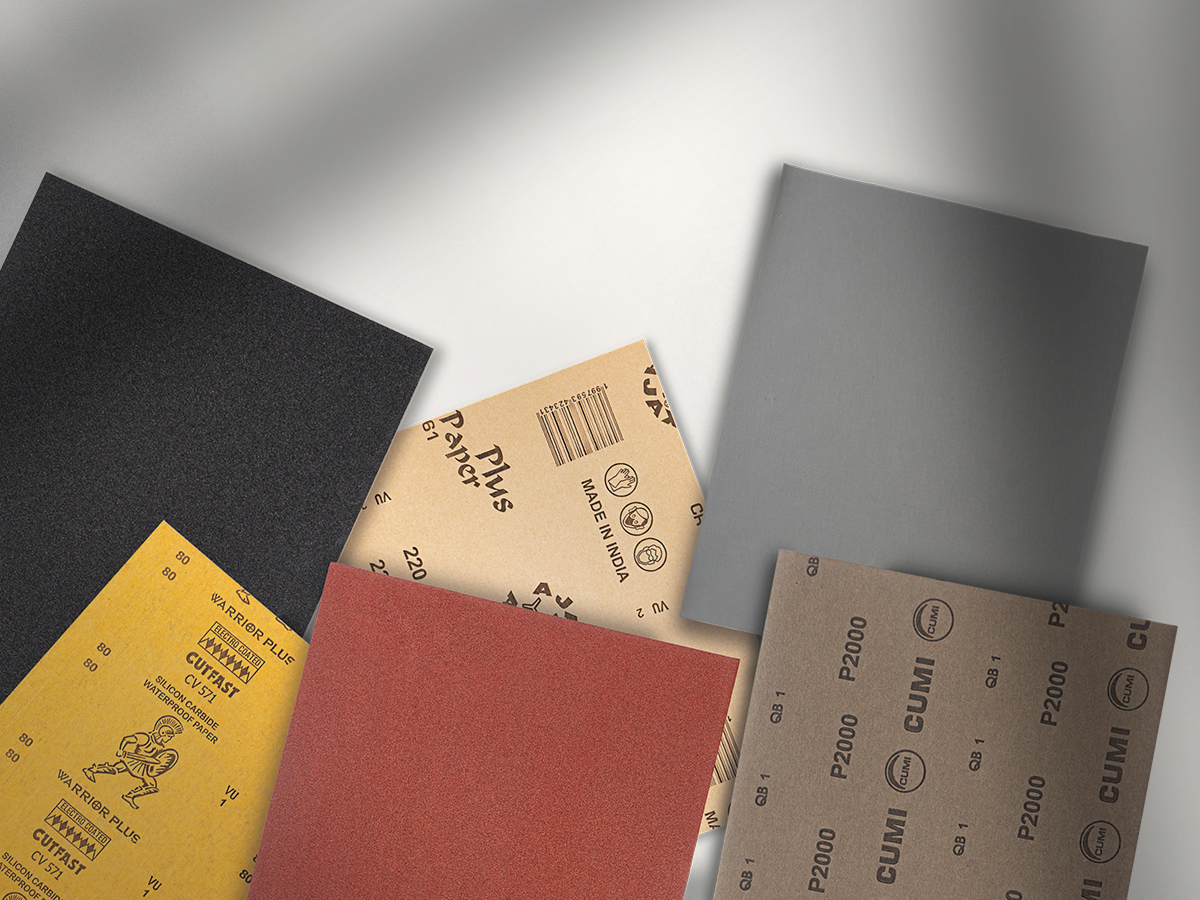
Quick answer: Sandpaper is graded by grit — 40–60 for heavy removal, 80–120 for surface prep, 150–180 before finishing, 220–400 between coats and 600–3000 for polishing. Choose aluminium oxide for wood and metal, silicon carbide for wet sanding and stone, and zirconia or ceramic for heavy metal grinding. Match the backing (paper, cloth, film) and format (sheet, roll, belt, disc) to your tool.
When it comes to surface preparation, finishing, or polishing, sandpaper is a must-have tool across various industries—from woodworking and metal fabrication to stone polishing and automotive refinishing. But with so many types, grits, and materials available, choosing the right sandpaper can be confusing.
In this CUMI Abrasives Complete Sandpaper Types & Grit Guide, we’ll break down everything you need to know—from grit levels to materials and the difference between wet and dry sandpaper—so you can make the right choice for your specific project.
What Is Sandpaper?
Sandpaper, also known as sanding paper, is an abrasive material used to remove material from surfaces through friction. It typically consists of:
- Abrasive grains (such as aluminum oxide or silicon carbide)
- A backing material (paper, cloth, or film)
- An adhesive that bonds the grains to the backing
Sandpaper Grit Sizes: Coarse to Ultra-Fine
The grit number of sandpaper indicates the size of the abrasive particles. The lower the number, the coarser the paper—and the more material it removes. Here’s a breakdown:
| Grit Range | Type | Best For |
| 40–60 | Coarse | Heavy material removal, paint stripping, rough shaping |
| 80–120 | Medium | Surface prep, removing small imperfections, sanding raw wood |
| 150–180 | Fine | Final sanding before finishing, smoothing surfaces |
| 220–400 | Very Fine | Between coats of finish, light sanding of painted surfaces |
| 600–3000+ | Ultra-Fine | Polishing, automotive finishing, stone and metal finishing |
Pro Tip: Always start with a coarser grit and move to finer grits for a smoother finish.
Common Types of Sandpaper Abrasives
Choosing the right abrasive material is just as important as selecting the right grit. Here are the most common types:
1) Aluminum Oxide
- Best For: Wood, metal, painted surfaces
- Durability: Long-lasting and self-sharpening
- Common Use: Versatile and widely used for both hand sanding and power sanding
2) Silicon Carbide
- Best For: Metal, stone, plastics, wet sanding
- Durability: Harder but wears out faster than aluminum oxide
- Common Use: Ideal for polishing and use with water or lubricant
3) Garnet
- Best For: Softwoods, hand sanding
- Durability: Wears quickly, creating a smoother finish
- Common Use: Wood finishing
4) Ceramic Alumina
- Best For: Heavy-duty sanding, metal
- Durability: Extremely durable and aggressive
- Common Use: Industrial sanding applications
Sandpaper Backing Types Explained: Paper, Cloth, Film and Sponge
The backing is the base the abrasive grain sits on. It decides how flexible the sandpaper is, how much load it can take, and whether it survives water. Two sheets with the same grit can perform very differently if the backing is wrong for the job.
Paper backing
Paper is the most common backing for hand sanding and light machine work. It is graded by weight: lighter papers bend easily around curves and mouldings, while heavier papers resist tearing on orbital and belt sanders. Waterproof paper backings are used for wet/dry sheets in automotive and paint finishing.
Cloth backing
Cloth (cotton or polyester) is stronger and more tear-resistant than paper. It is the standard choice for sanding belts, rolls and flap discs that run under heavy pressure on metal, stainless steel and hardwood. Lighter cloth flexes for contour work; heavier cloth handles stock removal and edge grinding.
Film backing
Polyester film is smooth and uniform, so grain sits at an even height. That gives a consistent scratch pattern, which matters for fine finishing on automotive clear coats, aerospace components and precision parts.
Sponge and foam backing
Sponge-backed abrasives follow curved and irregular surfaces and spread pressure evenly. They suit profiles, mouldings, drywall corners and paint prep between coats.
Table: Backing weight grades at a glance
|
Backing |
Weight grade |
Flexibility |
Typical use |
|---|---|---|---|
|
Paper |
A (light) |
Very high |
Hand sanding, fine finishing, wet/dry sheets |
|
Paper |
C / D (medium) |
Medium |
Hand and light orbital sanding of wood and paint |
|
Paper |
E / F (heavy) |
Low |
Drum, wide belt and floor sanding |
|
Cloth |
J (light) |
High |
Contour sanding, profile and hand-held belts |
|
Cloth |
X (medium) |
Medium |
General-purpose belts and rolls for metal and wood |
|
Cloth |
Y (heavy) |
Low |
Heavy stock removal, grinding belts, stainless steel |
|
Film |
Uniform |
Medium |
Precision and automotive finishing |
|
Sponge |
— |
Very high |
Curves, mouldings, drywall, between paint coats |
Quick rule: flexible backing for shapes, stiff backing for pressure and flat surfaces, waterproof backing whenever water or lubricant is used.
Sandpaper Formats: Sheets, Rolls, Belts, Discs and Flap Wheels
Sandpaper is not only sold as sheets. The format you buy depends on the tool you use and how much surface you need to cover. For industrial buyers, format is often the first decision on a purchase order, before grit or grain.
|
Format |
Used with |
Best for |
CUMI range |
|---|---|---|---|
|
Sheets |
Hand, sanding blocks, orbital sanders |
Wood, paint prep, automotive wet sanding, small jobs |
|
|
Rolls |
Cut to length by hand or for machines |
Workshops, furniture units, cutting custom strips |
|
|
Belts |
Portable, bench and wide belt sanders |
Stock removal, edge finishing, metal and wood production lines |
|
|
Discs |
Angle grinders, random orbital and disc sanders |
Weld blending, rust and paint removal, panel sanding |
|
|
Flap wheels and mops |
Angle grinders, drills, spindle machines |
Blending and finishing in one step, contours, tubes |
How to pick a format
- Start from the machine: the tool decides the format (belt sander → belts, angle grinder → fibre or flap discs).
- Match size to the tool: belt dimensions, disc diameter and arbor or hook-and-loop fitting must match.
- Then choose grain, grit and backing using the tables above.
- For bulk or production use, rolls and belts usually cost less per square metre than sheets.
CTA line under the table: “Not sure which format fits your machine? Call CUMI on 1800 3000 1131 or send an enquiry.“
Dry vs. Wet Sandpaper
Many people overlook the distinction between dry and wet/dry sandpaper, but the difference is key for performance.
1) Dry Sandpaper
- Use Cases: Woodworking, drywall, metal prep
- Abrasive Types: Usually aluminum oxide or garnet
- Application: Used without water
2) Wet Sandpaper (Wet/Dry Sandpaper)
- Use Cases: Automotive finishing, stone polishing, metal smoothing
- Abrasive Types: Typically silicon carbide
- Application: Used with water or lubricant to reduce heat and dust, and improve finish
Wet sanding is preferred for high-gloss finishes or when you need to avoid clogging.
How to Choose the Right Sandpaper
Consider the following when choosing sandpaper for your project:
| Project Type | Recommended Grits | Abrasive Type |
| Wood sanding | 80–220 | Aluminum oxide, garnet |
| Metal sanding | 60–400+ | Aluminum oxide, ceramic |
| Stone polishing | 200–3000+ | Silicon carbide |
| Automotive finish | 400–3000+ | Silicon carbide (wet/dry) |
| Paint removal | 40–80 | Aluminum oxide |
Sandpaper by Industry: Automotive, Aerospace, Woodworking and Metalworking
The generic chart above covers the basics. Each industry, though, has its own finish standard, production speed and failure risk. Here is how professionals in each sector choose sandpaper.
Automotive body shops and refinishing
Body shops work through a fixed grit sequence: coarse discs (P80–P180) to strip and shape filler, P320–P600 to prep primer, and P1500–P3000 waterproof sheets to remove orange peel and dust nibs before polishing. Silicon carbide on waterproof paper or film is the standard for wet sanding clear coats. CUMI for the automotive aftermarket and automotive ancillary manufacturing.
Aerospace
Aerospace finishing demands a consistent scratch pattern and no contamination of alloys and composites. Film-backed and fine-grit aluminium oxide or silicon carbide abrasives are common for blending, deburring and surface prep before coating. CUMI aerospace solutions.
Woodworking and furniture
Furniture units and plywood or flooring makers use aluminium oxide or garnet. They run 80–120 grit for shaping, 150–180 before staining and 220–320 between coats. Wide belts and rolls on heavy paper or cloth suit production lines; sheets and sponges suit hand finishing. CUMI for the wood industry.
Metal fabrication and stainless steel
Fabricators need fast cut and long life under heat. Zirconia and ceramic alumina on heavy cloth belts or fibre discs handle weld grinding and stock removal. Flap discs blend and finish in one pass, and finer aluminium oxide belts produce brushed or satin finishes on stainless steel. CUMI metal industry solutions.
Quick industry selector
|
Industry |
Typical grits |
Grain |
Backing / format |
|---|---|---|---|
|
Automotive refinishing |
P80–P3000 |
Silicon carbide, aluminium oxide |
Waterproof paper, film, discs |
|
Aerospace |
P180–P1200 |
Aluminium oxide, silicon carbide |
Film, cloth, discs |
|
Woodworking and furniture |
80–320 |
Aluminium oxide, garnet |
Paper sheets, rolls, wide belts |
|
Metal fabrication |
36–400 |
Zirconia, ceramic, aluminium oxide |
Cloth belts, fibre and flap discs |
Tips for Using Sandpaper Effectively
- Don’t skip grits – Progress gradually for a smoother finish.
- Use sanding blocks or machines—ensures even pressure and consistent results.
- Keep sandpaper clean—tap or brush it off to remove dust and debris.
- Change sheets when dull—worn paper reduces efficiency and may damage the surface.
- Use wet sanding for fine polishing—especially for cars, stones, and metals.
CUMI Sandpaper and Coated Abrasives Range
CUMI (Carborundum Universal Ltd.), part of the 124-year-old Murugappa Group, has made abrasives in India since 1954. Its coated abrasives are made at in-house Peter Schwabe maker and conversion facilities, and are used on steel, stainless steel, non-ferrous metals, wood, paint and glass.
|
Product group |
What it covers |
Link |
|---|---|---|
|
Sand paper and emery sheets |
Dry and waterproof (wet/dry) sheets for wood, metal and automotive |
|
|
Rolls |
Cloth and paper rolls for workshop and machine use |
|
|
Belts |
Sanding and grinding belts for portable, bench and wide belt machines |
|
|
Discs |
Fibre and sanding discs for grinders and orbital sanders |
|
|
Flap wheels and mops |
Flap discs, flap wheels and mops for blending and polishing |
|
|
Full coated range |
All coated abrasives in one place |
Download the CUMI catalogue: Grit charts, sizes and specifications for the full range.
1: Industrial Catalogue (PDF) ·
2: Construction and Wood Work Catalogue (PDF) ·
Text link: All catalogues
Need a bulk quote? Call 1800 3000 1131 or request a quote.
Where to Buy CUMI Sandpaper in India
CUMI sandpaper and coated abrasives are sold through a network of authorised dealers and distributors across India, as well as hardware and paint stores. Industrial buyers in manufacturing hubs such as Tamil Nadu, Maharashtra and Gujarat can buy through a local distributor or directly from CUMI for bulk orders.
Ways to buy:
- Find a dealer near you: call the toll-free line 1800 3000 1131 or submit an enquiry with your PIN code, and CUMI will connect you with the nearest authorised distributor.
- Bulk and industrial orders: use the request a quote form and select your industry for a direct response from the CUMI sales team.
- CUMI Connect app: browse products and connect with CUMI on Android or iOS.
- WhatsApp: message CUMI on +91 78451 21555.
- Become a dealer: distributors and resellers can apply through the CUMI partnership page.
Conclusion
From coarse 40-grit sheets for heavy-duty sanding to ultra-fine 3000-grit papers for polishing, understanding sandpaper types is the first step to achieving professional-quality finishes. By choosing the right grit, material, and application method—especially between dry vs wet sanding—you’ll ensure better performance, fewer errors, and a smoother final result.
Frequently Asked Questions
1) Where can I buy CUMI’s industrial-grade sandpapers?
CUMI sandpapers are widely available through dealers, retail shops such as hardware and paint counters, and online partners and can also be ordered directly via CUMI’s website.
2) Why choose CUMI sandpaper over generic brands for your project?
CUMI sandpapers are engineered for higher durability, performance, and consistent grit quality across a wide variety of tasks.
3) How do I choose the right sandpaper grit for my job?
Select coarse grits for heavy material removal and finer grits (up to ultra-fine) for finishing and polishing work.
4) When should wet/dry sandpaper be used?
Wet/dry sandpaper is ideal for metal finishing, auto refinishing, and surfaces that benefit from water lubrication. It is also suitable for wall sanding and wood sanding.
5) What backing types does CUMI offer for sandpapers, and why does it matter?
Options include paper, cloth, and backing, each chosen based on application needs for strength, flexibility, and durability.
6) How do I choose between aluminum oxide and garnet sandpaper?
Aluminum oxide sandpaper, with its superior hardness (Mohs 9.0), excels for aggressive material removal, power sanding, and hard surfaces like metal or hardwood—ideal for heavy-duty tasks where durability and reusability matter. Garnet sandpaper (Mohs 7.5-8.5), being sharper and fracturing to finer edges, is better for hand-sanding softwoods, achieving smoother finishes with less dust—perfect for woodworking detail work.
CUMI Abrasives – Carborundum Universal Limited
Dare House Extension, 4th Floor, 234, NSC Bose Road, Chennai, Tamil Nadu 600001, India
Customer Support: +91-8035120000
Sales: +91-7845121555
Email: [email protected]