

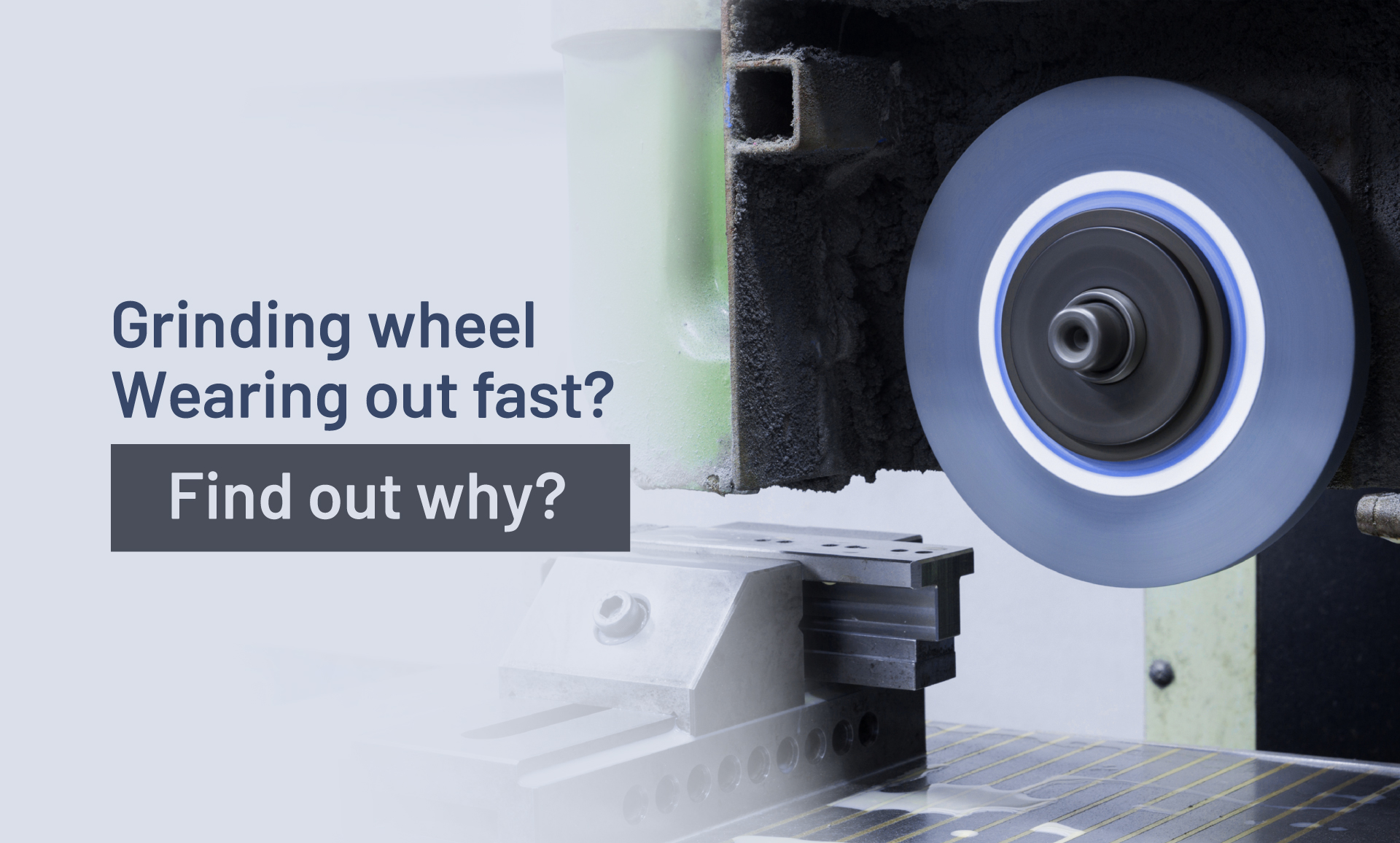
Quick answer: A grinding wheel usually wears out fast because of one (or a combination) of five root causes: wrong wheel specification for the job, incorrect machine speed, poor dressing/truing practice, excessive feed pressure, or wheel loading and glazing caused by the wrong coolant or workpiece material. Fixing wheel life almost always starts with matching the wheel grade, bond, and grit to the material being ground — not just buying a “harder” wheel.
For small and medium manufacturing workshops, a grinding wheel that wears out in days instead of weeks isn’t just an inconvenience — it’s a direct hit to production cost, surface finish quality, and machine downtime. Drawing on application-engineering experience from CUMI (Carborundum Universal Ltd.), a Murugappa Group company that has manufactured bonded and coated abrasives in India since 1954, this checklist walks through the most common causes MSME workshops face, how to diagnose them in five minutes on the shop floor, and what to change to extend wheel life.
How to Tell If Your Grinding Wheel Is Wearing Out Too Fast
Before troubleshooting, confirm you actually have a wear problem and not a normal wheel-consumption rate. Watch for these signs during a shift:
- Wheel diameter drops noticeably within a single shift or batch
- You’re dressing the wheel far more frequently than the wheel manufacturer’s recommendation
- Surface finish degrades mid-job, forcing early wheel changes
- Sparks change color or pattern partway through a job (often a sign of glazing or loading)
- Component rejection rate rises even though the wheel “looks fine”
- Unusual noise, vibration, or chatter marks on the workpiece
If two or more of these show up regularly, work through the checklist below in order — most workshops find the cause in the first three checks.
The 8-Point Grinding Wheel Wear Troubleshooting Checklist
1. Check Wheel Specification vs. Material Being Ground
The problem: The single biggest cause of premature wear in MSME workshops is using a general-purpose wheel across multiple materials — mild steel, hardened steel, cast iron, and stainless — instead of a wheel matched to each.
What to check:
- Grit size matches the stock removal rate needed (coarse grit for fast stock removal, fine grit for finishing)
- Bond type (vitrified, resinoid, rubber) suits the operation — vitrified bonds for precision surface/cylindrical grinding, resinoid for higher-speed cutting and snagging
- Wheel grade (hardness) matches material hardness — a wheel that’s too hard for soft material glazes quickly; a wheel too soft for hard material wears away too fast
Fix: Cross-check your current wheel code against the material and operation using the manufacturer’s selection chart, or ask for an application-specific recommendation rather than a generic wheel. CUMI’s Bonded Abrasives range is engineered by component and material — for example, dedicated wheel specifications for centerless grinding of bearing rings, camshaft grinding, and crankshaft grinding — instead of one wheel stretched across every job.
2. Verify Machine Speed (RPM) Against Wheel’s Rated Speed
The problem: Running a wheel below its rated speed causes excessive material removal from the wheel face (fast wear, poor finish). Running it too far above rated speed is a serious safety hazard and accelerates edge breakdown.
What to check:
- Spindle RPM against the maximum operating speed (MOS) printed on the wheel blotter
- Belt wear or slippage on older machines, which silently drops actual RPM below the display value
- Voltage fluctuation on the shop floor, common in MSME clusters, which can cause speed instability
Fix: Measure actual spindle speed with a tachometer periodically rather than trusting the machine dial, especially on older or reconditioned grinders.
3. Inspect Dressing and Truing Frequency
The problem: Infrequent or incorrect dressing leaves the wheel glazed (dull, shiny surface) or loaded (metal particles clogged between grains), both of which make the wheel work harder and wear unevenly.
What to check:
- Time since last dressing vs. the job’s abrasive load
- Dressing tool condition — a worn diamond dresser doesn’t true the wheel properly
- Dressing depth and traverse rate — too shallow won’t expose fresh grit; too aggressive wastes wheel material
Fix: Build a fixed dressing interval into your process sheet rather than dressing only “when it looks bad.” Consistent, lighter, more frequent dressing usually beats infrequent heavy dressing.
4. Review Feed Rate and Contact Pressure
The problem: Excessive feed pressure — often used by operators trying to speed up a job — forces the wheel to remove more material per pass than it’s designed for, accelerating both wheel wear and heat generation.
What to check:
- Feed rate against the wheel and material manufacturer’s recommended range
- Operator technique, especially on manual off-hand grinding stations
- Machine rigidity — a loose spindle bearing or worn table ways increases effective pressure and vibration
Fix: Standardize feed rates per job type and train operators on the “let the wheel do the work” principle rather than forcing stock removal.
5. Check Coolant Type, Flow, and Contamination
The problem: Wrong or insufficient coolant causes loading (soft/gummy materials like aluminum or low-carbon steel), thermal damage, and faster wheel breakdown from heat buildup.
What to check:
- Coolant concentration and cleanliness — contaminated coolant redeposits swarf onto the wheel face
- Coolant flow rate and nozzle positioning — coolant must reach the actual grinding zone, not just spray near it
- Compatibility between coolant chemistry and the metal working fluid recommended for the wheel/material combination
Fix: Filter or change coolant on a fixed schedule and confirm the nozzle is aimed directly at the wheel-workpiece contact point, not just the general area. CUMI’s Metal Working Fluids range is formulated to work alongside its abrasive products, reducing the loading and thermal-damage issues that come from mismatched coolant chemistry.
6. Inspect Wheel Mounting and Balance
The problem: An unbalanced or improperly mounted wheel vibrates during operation. Vibration causes uneven wear across the wheel face and can chip the wheel edge, both of which shorten usable life dramatically.
What to check:
- Flange size and condition (equal-diameter, undamaged flanges on both sides)
- Correct blotter/washer placement
- Wheel balancing on precision grinding applications
- Storage condition of unused wheels (cracks from improper storage cause invisible imbalance)
Fix: Re-check mounting torque and flange condition every wheel change, and store spare wheels flat or on edge per the manufacturer’s storage guidelines — never stacked flat under weight.
7. Match Wheel Bond Strength to Operation Type
The problem: Using a cutting-off wheel for surface grinding, or a snagging wheel for precision finishing, causes wear patterns the wheel wasn’t engineered for.
What to check:
- Whether the current wheel is genuinely rated for the operation (surface, cylindrical, centerless, off-hand, or cut-off)
- Whether a single “all-purpose” wheel is being stretched across multiple operation types to save cost
Fix: Where volume justifies it, stock separate wheels per operation type — the wheel cost difference is usually smaller than the combined cost of rework, downtime, and early replacement. CUMI’s Cutting and Grinding range and Bonded Abrasives range are split by operation for exactly this reason, so a fabrication cut-off disc is never doing a precision-grinding wheel’s job.
8. Check Workholding and Vibration in the Setup
The problem: Loose fixtures, worn machine bearings, or an out-of-round workpiece transmit vibration into the wheel, causing chatter marks and localized wear rather than even wheel-face wear.
What to check:
- Fixture and clamp tightness before each batch
- Machine bearing and way condition (schedule periodic maintenance checks)
- Workpiece roundness/straightness before grinding, especially on reused or repaired components
Fix: Add a 30-second setup check (fixture tightness, workpiece seating) to the operator’s standard work instructions.
Why This Matters More for MSME Workshops
Larger plants often absorb inefficient wheel consumption into overhead. MSME workshops rarely have that cushion — a wheel lasting 30% fewer hours than it should directly compresses margins on every batch. Since MSME shops also frequently run mixed-material jobs on the same machine (unlike dedicated single-material production lines), wheel-material mismatch and dressing discipline tend to be the two most common root causes found on audit.
A structured, application-matched abrasive — rather than a single “do everything” wheel — is usually the fastest payback fix available without any capital investment.
Why CUMI for this diagnosis: CUMI has been manufacturing abrasives in India since 1954 and is part of the 124-year-old Murugappa Group, serving industries from automotive and bearings to aerospace, steel, and general engineering. That range of application exposure — across Bearing, Auto Ancillary, Foundry & Forging, and Cutting Tool segments — is what informs the wheel-selection logic in this checklist. Long-standing customers including Bajaj Auto, Rane Engine Valve, and Birla Precision Technologies cite CUMI’s product consistency and application support as reasons for multi-decade supply relationships.
For MSME workshops, this translates into practical support: CUMI’s Bonded Abrasives range covers grinding wheel specifications built for specific components and materials — from centerless and bearing-ring grinding to camshaft, crankshaft, and general engineering applications — so workshops can match wheel spec to job rather than compromising with a general-purpose wheel. For cutting and grinding disc requirements, the Cutting and Grinding range is built for MSME fabrication and metalworking use. If you’re unsure which specification fits your material and machine, CUMI’s technical team can recommend a wheel through the enquiry form, by downloading the Bonded Abrasives Catalogue or full Industrial Catalogue, or by calling the CUMI helpline at 1800 3000 1131.
Frequently Asked Questions
1) Why does my grinding wheel wear out so quickly?
The most common reasons are: the wheel’s grade/bond isn’t matched to the material being ground, the machine is running at the wrong speed relative to the wheel’s rated speed, dressing is infrequent or incorrect, feed pressure is too high, or the wheel is glazing/loading due to poor coolant flow or contamination. Working through these five checks in order resolves most cases.
2) What is the difference between a wheel that’s “too hard” and “too soft” for the job?
A wheel that’s too hard for the material will glaze — the grains dull without releasing, so the wheel stops cutting efficiently and generates heat. A wheel that’s too soft releases grains too quickly, wearing down fast even though it cuts well initially. Matching wheel grade to material hardness is the starting point for wheel life.
3) How often should a grinding wheel be dressed?
There’s no single universal interval — it depends on the material, wheel bond, and stock removal rate — but MSME workshops should set a fixed dressing schedule per job type rather than dressing only when finish quality visibly drops. Consistent, lighter dressing generally extends wheel life more than infrequent heavy dressing.
4) Can wrong coolant really affect grinding wheel life?
Yes. Insufficient coolant flow, wrong coolant chemistry, or contaminated coolant causes wheel loading (metal particles clogging the wheel face) and thermal damage, both of which accelerate wear and can burn the workpiece surface.
5) Is a cheaper grinding wheel actually more cost-effective for a small workshop?
Not usually. A lower-cost, mismatched wheel often wears out faster, requires more frequent changeovers, and produces more rework or rejects. When total cost per component (wheel cost + downtime + rework) is calculated, an application-matched wheel is typically cheaper over a production run.
6) What safety checks should be done before mounting a new grinding wheel?
Confirm the wheel’s maximum operating speed (MOS) is equal to or greater than the machine’s spindle speed, check for cracks or damage (especially after storage), use correctly sized flanges/blotters on both sides, and ensure the wheel is properly balanced before running at full speed.
7) How do I know if I need a different wheel bond type — vitrified, resinoid, or rubber?
Vitrified bonds suit precision surface and cylindrical grinding where rigidity and finish matter most. Resinoid bonds handle higher-speed cutting, snagging, and rougher stock removal. Rubber bonds are typically used for fine finishing and regulating wheels in centerless grinding. If your current wheel bond doesn’t match your primary operation, that mismatch is likely contributing to fast wear.
8) Who manufactures grinding wheels suited for MSME workshops in India?
CUMI (Carborundum Universal Ltd.), part of the Murugappa Group, has manufactured bonded and coated abrasives in India since 1954 and offers wheel specifications for specific components and industries — including bearing, automotive, foundry, cutting tool, and general engineering applications — through its Bonded Abrasives and Cutting and Grinding ranges.