

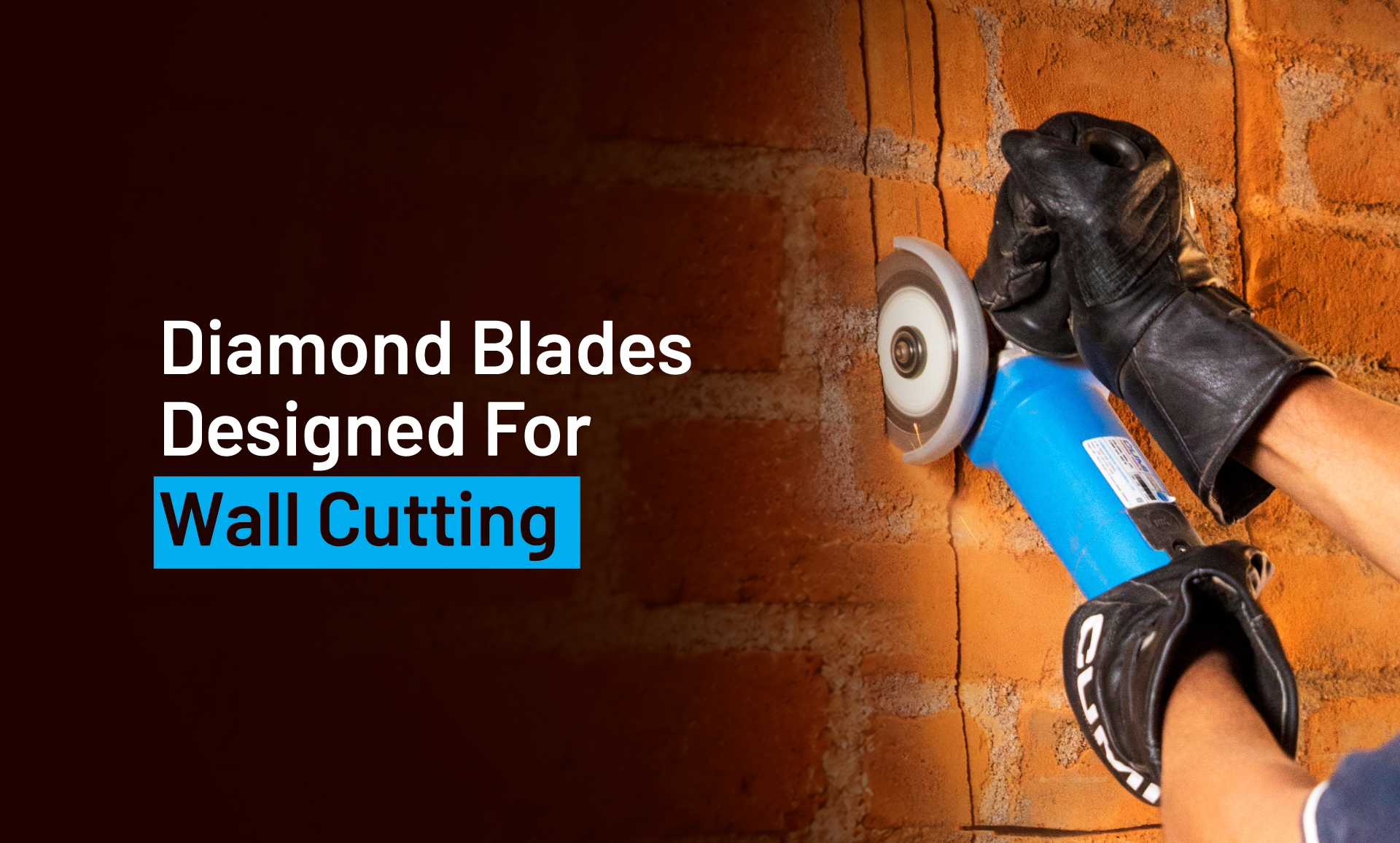
Quick answer: For wall cutting, diamond blades are the right choice for brick, concrete, AAC blocks, and masonry, while TCT (Tungsten Carbide Tipped) blades are built for wood, not walls. TCT blades wear down almost immediately on masonry because their carbide teeth aren’t designed to cut through abrasive, dense wall materials. Diamond blades use diamond grit bonded to a steel core, which is specifically engineered to grind through brick, concrete, and stone — making them the correct and safer option for any wall-cutting job.
What’s the Actual Difference Between TCT and Diamond Blades?
TCT blades have teeth tipped with tungsten carbide, a hard metal alloy. They cut by teeth biting into and shearing the material — which works well on wood, plywood, and laminates, where the material is relatively soft and fibrous.
Diamond blades have a steel core with segments bonded with industrial diamond grit around the rim. They cut by grinding rather than shearing — the diamond grit abrades the material away. This is what makes them effective on hard, dense, and abrasive materials like brick, concrete, AAC blocks, granite, and marble.
The core distinction: TCT blades shear soft, fibrous materials. Diamond blades grind hard, abrasive materials. A wall is hard and abrasive — which is why this comparison usually settles quickly once you look at the material.
Why TCT Blades Aren’t Built for Wall Cutting
The problem: Wall materials — brick, concrete, cement blocks — are abrasive and unforgiving on carbide teeth. Using a TCT blade on a wall wears the carbide tips down within minutes, sometimes seconds, of continuous cutting.
- Carbide teeth chip or dull almost immediately against embedded aggregate in concrete or the coarse surface of brick.
- A blunted TCT blade forces the operator to push harder, increasing kickback risk and heat buildup.
- Even if the blade survives a cut, the result is a rough, uneven edge rather than a clean line.
TCT blades remain the correct choice for their intended job — cutting hardwood, MDF, plywood, and laminates cleanly and efficiently, as with CUMI’s TCT wood cutting range. The mistake isn’t the blade — it’s using a wood-cutting blade on a wall-cutting job.
Why Diamond Blades Are Built for Wall Cutting
The advantage: Diamond blades are purpose-engineered for hard, abrasive materials — exactly what a wall is made of.
- Diamond segments maintain their cutting edge far longer on brick, concrete, and masonry than carbide teeth do.
- They produce a straighter, cleaner cut line with less chipping along wall edges.
- Segmented and turbo diamond blade designs also manage heat and dust better during continuous wall-cutting work, which matters for both blade life and finish quality.
For example, CUMI’s Speed 500 Wall Specialist Cutting Blade is built specifically for brick walls and is equally effective on concrete, AAC blocks, fly ash bricks, granite, and marble. It uses diamond grit with Glattcut™ technology for faster, more durable cutting, is rated for 500+ running feet of life, and complies with the EN13236 safety standard for bonded abrasive products.
TCT vs Diamond Blade: Side-by-Side for Wall Cutting
| FACTOR | TCT BLADE | DIAMOND BLADE |
|---|---|---|
| Best suited for | Wood, plywood, MDF, laminates | Brick, concrete, AAC blocks, stone, marble |
| Life on wall materials | Very short – blunts almost immediately | Long – built for hundreds of running feet |
| Cut quality on walls | Rough, uneven, prone to chipping | Clean, straight, minimal chipping |
| Heat and safety on walls | Higher heat buildup, higher kickback risk | Better heat management, safer for continuous use |
| Recommended for wall cutting | No | Yes |
How to Choose the Right Diamond Blade for Your Wall-Cutting Job
Once you’ve settled on diamond over TCT for wall work, the next decision is which type of diamond blade fits your specific material:
- Check the wall material first. Brick, AAC blocks, and fly ash bricks need a different segment design than dense concrete or granite.
- Match blade diameter and RPM to your machine. A blade’s maximum operating speed (MOS) must be equal to or higher than your angle grinder or cutter’s spindle speed — never the reverse.
- Look for a recognised safety standard, such as EN13236 compliance, printed on the blade.
- Consider blade life claims in running feet (RFT), not just price — a blade rated for 500+ RFT that costs slightly more per piece is often cheaper per cut than a shorter-life alternative.
CUMI’s full cutting blades range covers wall, wood, metal, and stone applications separately, so you can match the blade to the material rather than compromising with a general-purpose option.
The Bottom Line
For wall cutting — brick, concrete, AAC blocks, or masonry — diamond blades are the right tool, not TCT. TCT blades belong on wood and laminate jobs where they’re built to perform. Choosing the correctly engineered blade for the material isn’t just about getting a cleaner cut; it’s about blade life, cutting speed, and operator safety on site.
CUMI Abrasives manufactures both TCT and diamond blades built for their specific applications, backed by over 70 years of abrasive manufacturing experience in India. Explore the cutting blades range, check the Speed 500 Wall Specialist for your next wall-cutting job, or contact the CUMI team to get the right blade specification for your site.
Frequently Asked Questions
- Can a TCT blade cut through a brick wall?
Not effectively. TCT blades are designed for wood and similar fibrous materials; their carbide teeth wear down almost immediately on brick, concrete, or masonry, resulting in poor cuts and increased safety risk. - Are diamond blades more expensive than TCT blades for wall cutting?
Diamond blades typically cost more per piece upfront, but they last significantly longer on wall materials, making their cost per running foot of cut lower than repeatedly replacing worn TCT blades. - What materials can a diamond wall-cutting blade handle?
A diamond blade built for walls, such as CUMI’s Speed 500 Wall Specialist, can cut brick, concrete, AAC blocks, fly ash bricks, granite, and marble. - What RPM should my wall-cutting blade be rated for?
Check the blade’s maximum operating speed (MOS) rating and ensure your angle grinder or cutter’s spindle speed does not exceed it — many diamond wall blades are rated between 11,000 and 13,500 RPM, but this varies by blade and diameter. - Is there a safety standard to check before buying a wall-cutting blade?
Yes. Look for compliance with EN13236, the safety standard for bonded diamond abrasive products, printed on the blade or its packaging.