

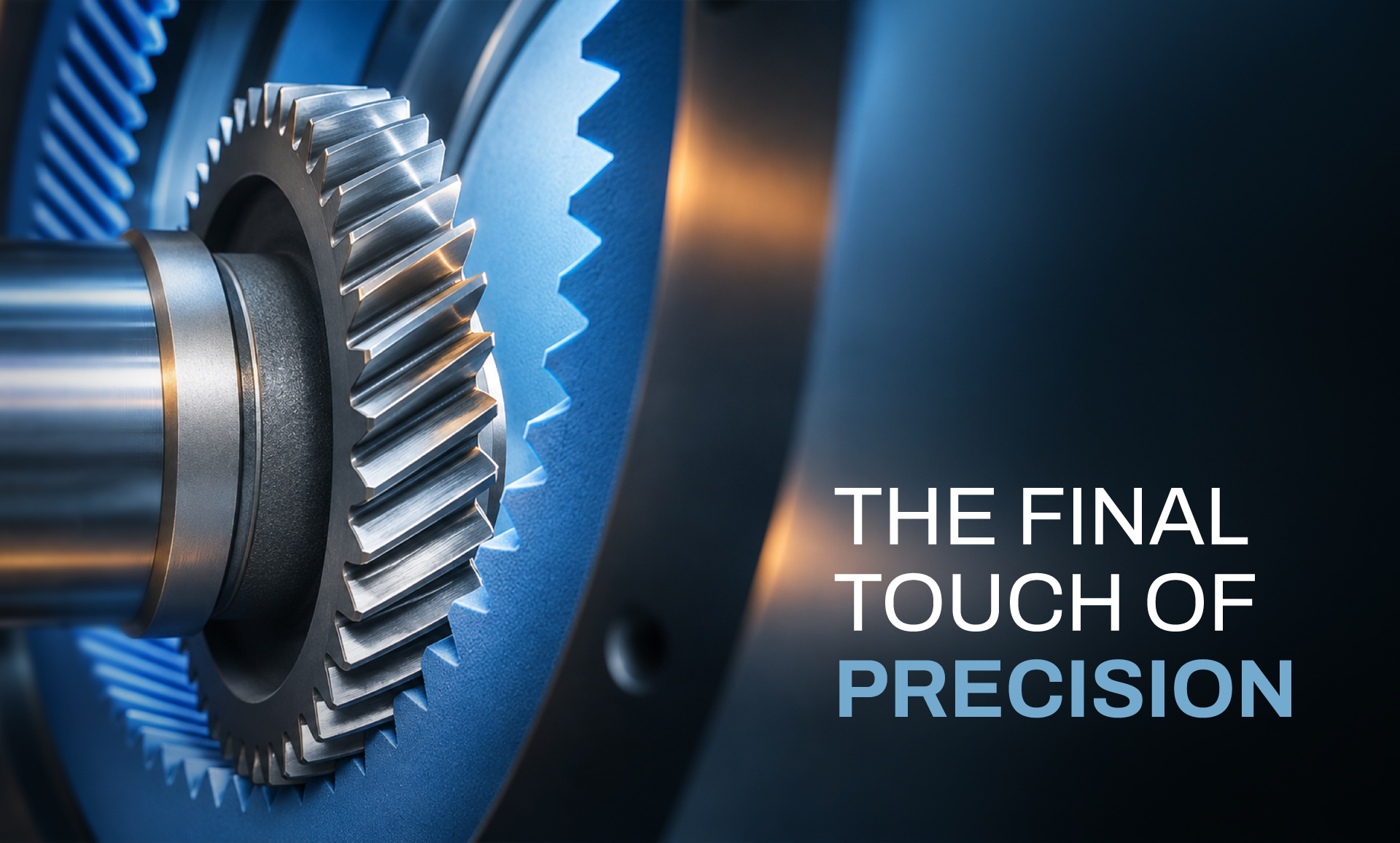
Quick answer: Honing is a precision abrasive finishing process in which bonded abrasive stones or wheels move against a pre-machined surface at low speed and controlled pressure. It removes a small amount of material to correct geometry, bring the part to final size and produce a specified surface finish – on engine cylinders, hydraulic bores and hardened transmission gears.
In modern manufacturing, a few microns decide whether a part runs quietly for years or fails early. A slightly out-of-round hydraulic cylinder leaks; a distorted transmission gear whines under load. Honing closes that gap. In this guide, CUMI Abrasives – part of the Murugappa Group and an abrasives manufacturer since 1954 – explains how honing works, its tools, how it compares with grinding, and how to choose the right honing abrasive.
What Is Honing?
Honing is an abrasive machining process that improves the geometric accuracy, dimensional size and surface finish of a pre-machined part by rubbing bonded abrasive against it along a controlled, often combined, motion path.
Unlike grinding, where a fast-rotating wheel follows a fixed path, honing uses low cutting speeds and a large abrasive contact area. This averages out high spots and errors left by earlier operations, which is why honing is often called a self-truing process.
Its purpose in manufacturing is to:
- Bring a bore or gear to final size within tight tolerances.
- Correct form errors such as out-of-roundness, taper, bell-mouth or, in gears, heat-treatment distortion.
- Produce a controlled surface texture – for example, a crosshatch that retains oil in an engine cylinder, or a smooth tooth flank that reduces gear noise.
How Does the Honing Process Work?
A typical honing operation follows this sequence:
- Workpiece preparation. The part arrives after boring, turning, grinding or gear cutting, often followed by heat treatment, with only a small stock left for honing.
- Selection of the honing abrasive. Grain type, grit size, bond and hardness are chosen to suit the workpiece material, stock allowance and target finish.
- Positioning and alignment. The part is fixtured. In bore honing, the tool often floats so it follows the existing bore axis.
- Controlled abrasive contact and movement. In bore honing, the tool rotates and strokes while the stones expand under controlled pressure. In gear honing, an internally toothed honing wheel meshes with the gear at a crossed axis.
- Honing fluid application. Honing oil or water-based coolant flushes swarf, controls temperature and keeps the abrasive free-cutting. CUMI’s range of metalworking fluids covers emulsions, semi-synthetics, synthetics and neat oils.
- Material removal and surface refinement. High points go first; as geometry improves, contact evens out and the finish refines.
- Inspection. Bores are checked for size, roundness and straightness; gears for profile, lead and pitch; surface roughness with a profilometer.
About the crosshatch pattern: In bore honing, rotation plus reciprocation leaves intersecting helical scratches – the crosshatch. In engine cylinders, it holds oil and helps the piston rings seat. Not every honing operation produces or needs one; gear honing is judged by flank accuracy and finish instead.
Types of Honing Processes
Some honing terms describe where honing happens; others are just quality descriptors.
- Internal honing / bore honing. Effectively the same thing – honing an internal cylindrical surface, the most common form. Used on cylinder bores, hydraulic cylinders, connecting-rod bores and valve bodies. Variations include single-pass honing and plateau honing (a two-stage engine-cylinder finish).
- External honing. Honing an outside diameter such as a shaft or journal – often done by superfinishing with an oscillating stone.
- Gear honing. Hard finishing of heat-treated gears with a dressable, internally toothed honing ring. It removes heat-treatment distortion, nicks and burrs, improves profile and lead accuracy, and refines flank finish – widely used for transmission gears.
- Precision honing. Not a separate process – it describes honing to very tight size, form and finish tolerances, the goal of most industrial honing.
What Tools Are Used in the Honing Process?
- Honing machines. Vertical or horizontal, manual or CNC, controlling rotation, stroke, pressure and cycle time. Gear honing uses dedicated machines that mesh the gear with a honing ring.
- Honing stones and abrasive sticks. Bonded abrasive blocks mounted in the honing head. Common abrasives are aluminium oxide and silicon carbide. CBN and diamond are used for very hard or abrasive materials.
- Honing heads. Hold the stones and expand them radially to maintain cutting pressure as the bore grows.
- Honing mandrels. For smaller bores; carry an abrasive sleeve or stone expanded in small increments.
- Abrasive honing wheels (honing rings). Internally toothed vitrified or resin-bonded wheels used in gear honing, periodically dressed to restore their tooth profile – the principle covered in our guide on when to dress a grinding wheel.
- Honing fluids and lubricants. Remove swarf, prevent loading and control heat.
- Measuring and inspection equipment. Bore gauges, air gauges, gear analysers and surface roughness testers.
Grain type sets cutting ability, grit sets finish, and bond sets how the abrasive wears and holds form.
Applications of Honing in Metalworking
- Transmission and gear manufacturing. Gear honing finishes hardened spur and helical gears for lower noise and better durability – see CUMI’s abrasive solutions for the transmission industry.
- Automotive engines and precision bores. Cylinder bores (crosshatch for oil retention), connecting rods, fuel-system and brake parts.
- Hydraulic and pneumatic components. Cylinder tubes and valve bodies where roundness and finish decide sealing performance.
- Aerospace components. Actuator bores and landing-gear parts with strict tolerance requirements.
- Industrial machinery and precision engineering. Compressors, pumps, gearboxes and machine-tool spindles.
What Are the Benefits of Honing?
- Improved surface finish. Fine, controlled roughness suited to sealing, lubrication or quiet running.
- Better dimensional accuracy. Final size is reached by removing small, controlled amounts of stock.
- Improved geometric precision. Honing can correct roundness, straightness, taper and, in gears, profile and lead errors left by earlier processes.
- Controlled material removal. Low cutting speeds and wide contact limit heat input and surface damage.
- Reduced surface irregularities. Peaks, burrs and minor nicks are removed.
- Improved component performance. In gears, better flank finish and accuracy help reduce noise, vibration and harshness (NVH).
- Potential gains in wear resistance and service life. A better surface can improve wear and fatigue behaviour, but gains depend on material, design and operating conditions and should be validated per application.
Honing vs. Grinding – What Is the Difference?
| Comparison Factor | Honing | Grinding |
| Process | Low-speed abrasive finishing with large contact area and combined motion (rotation + stroke, or crossed-axis meshing for gears) | High-speed rotating wheel removing material along a defined path |
| Primary purpose | Final sizing, geometry correction and surface finish | Shaping, sizing and finishing; can remove larger amounts of stock |
| Material removal | Small, controlled stock | Small to large, depending on the operation |
| Surface finish | Very fine, with a controlled texture (e.g. crosshatch) | Fine to very fine, depending on wheel and parameters |
| Dimensional accuracy | Very high; also corrects form errors | High; accuracy follows machine and wheel path |
| Typical applications | Cylinder bores, hydraulic tubes, hardened gears | Shafts, bearings, gear profiles, flat surfaces, tools |
| Abrasive tools | Honing stones, sticks, mandrels, honing rings | Grinding wheels (vitrified, resin, CBN, diamond) |
The two processes are partners, not rivals. A typical gear might be cut, heat-treated, ground to form, and then honed to remove distortion and refine the flanks. Learn more about the grinding side in our guide to CUMI’s gear grinding wheel range.
How to Choose the Right Honing Abrasive
- Workpiece material. Aluminium oxide suits most steels. Silicon carbide suits cast iron and non-ferrous metals. CBN and diamond suit very hard materials.
- Required surface finish. Finer grits give smoother finishes but remove stock more slowly.
- Tolerances and stock. Tight tolerances need a predictable-wearing abrasive; more stock needs a coarser, freer-cutting one.
- Machine compatibility. Honing rings and stones must match the machine and its dressing system.
- Grain and grit. Engineered grains, such as micro-crystalline aluminium oxide, keep cutting edges sharp longer. Our guide on grit size, bond type and abrasive material explains these trade-offs.
- Bond type. Vitrified bonds offer rigidity, thermal stability and form holding. Resin bonds are more elastic and can give a smoother finish.
- Operating conditions and fluid. Speed, pressure, cycle time, dressing frequency and coolant all affect results.
Selection is application-specific – CUMI’s engineers can recommend a specification for your component, machine and quality targets.
CUMI Honing Gear Grinding Wheels for Precision Finishing
For gear finishing, CUMI offers Honing – Gear Grinding Wheels designed for high-precision transmission gears where surface quality, noise and durability matter.
Key points from CUMI’s product information:
- Two specifications: Vitrified Honing (5CSA220 M8 V500) and Epoxy Resin Honing (CUMISA180 E895).
- Engineered grains: advanced macro- and micro-crystalline aluminium oxide for efficient, consistent cutting.
- Controlled stock removal: up to 0.1 mm, while maintaining dimensional accuracy.
- Surface finish: up to 0.15 Ra.
- Gear performance: helps reduce NVH and improve pitting resistance, supporting gear durability and fatigue life.
- Productivity: faster grinding cycles with consistent, cost-efficient quality.
These wheels suit high-power-density, low-noise gears in automotive and industrial transmissions. For where epoxy-bonded wheels fit in precision work, see why industry leaders are choosing epoxy bond wheels.
Frequently Asked Questions About Honing
- What is honing in manufacturing?
Honing is a precision abrasive finishing process. Bonded abrasive stones or wheels are moved against a pre-machined surface at low speed to correct geometry, reach final size and create a specified surface finish. It is used on cylinder bores, hydraulic tubes and hardened transmission gears. - What is the main purpose of honing?
The main purpose of honing is to give a part its final size, accurate geometry and functional surface finish. It corrects errors such as out-of-roundness, taper or gear heat-treatment distortion, and produces a surface suited to sealing, lubrication or quiet running. - How does the honing process work?
In bore honing, a tool carrying abrasive stones rotates and strokes inside the bore while the stones expand under controlled pressure, with honing fluid flushing away swarf. In gear honing, an internally toothed honing wheel meshes with the gear at a crossed-axis angle to refine the tooth flanks. - What tools are used for honing?
Honing uses honing machines, honing heads, abrasive stones or sticks, mandrels for small bores, and honing rings for gears. Honing fluids keep the abrasive cutting freely. Bore gauges, gear analysers and surface roughness testers are used to inspect size, geometry and finish. - What is the difference between honing and grinding?
Grinding uses a fast-rotating wheel along a defined path and can remove more material. Honing uses low speed, large contact area and combined motion to remove small amounts of stock, correct form errors and refine finish. Many parts are ground first and honed afterwards. - Which materials can be honed?
Most metals can be honed, including hardened and unhardened steels, cast iron, aluminium alloys, bronze and brass. Very hard materials such as carbides or hard-chromed surfaces are honed with superabrasives like CBN or diamond. The abrasive is chosen to match the material. - Is honing used for gear manufacturing?
Yes. Gear honing is a hard-finishing process for heat-treated gears, especially in automotive and industrial transmissions. It removes heat-treatment distortion and burrs, improves profile and lead accuracy, and refines tooth flank finish, which helps reduce gear noise and improve durability. - How do you select the right honing abrasive? Consider the workpiece material, stock to be removed, required finish and tolerances, machine and dressing system, grit size, bond type and coolant. For gear honing, vitrified and resin-bonded wheels behave differently. An abrasive supplier’s application engineers can recommend a specification for your part.
Conclusion
Honing turns a well-machined part into a precise, reliable one. It brings bores and gears to final size, corrects geometry and creates the surface that decides how a component seals, lubricates and runs. Results depend heavily on the abrasive – grain, grit and bond must suit the material, machine and quality target.
For transmission gear finishing, CUMI’s Honing – Gear Grinding Wheels combine engineered aluminium oxide grains with vitrified and epoxy resin options for controlled stock removal and fine surface finish. Explore the CUMI honing wheel range, or contact CUMI’s technical team on 1800 3000 1131 to discuss the right specification for your gears.