

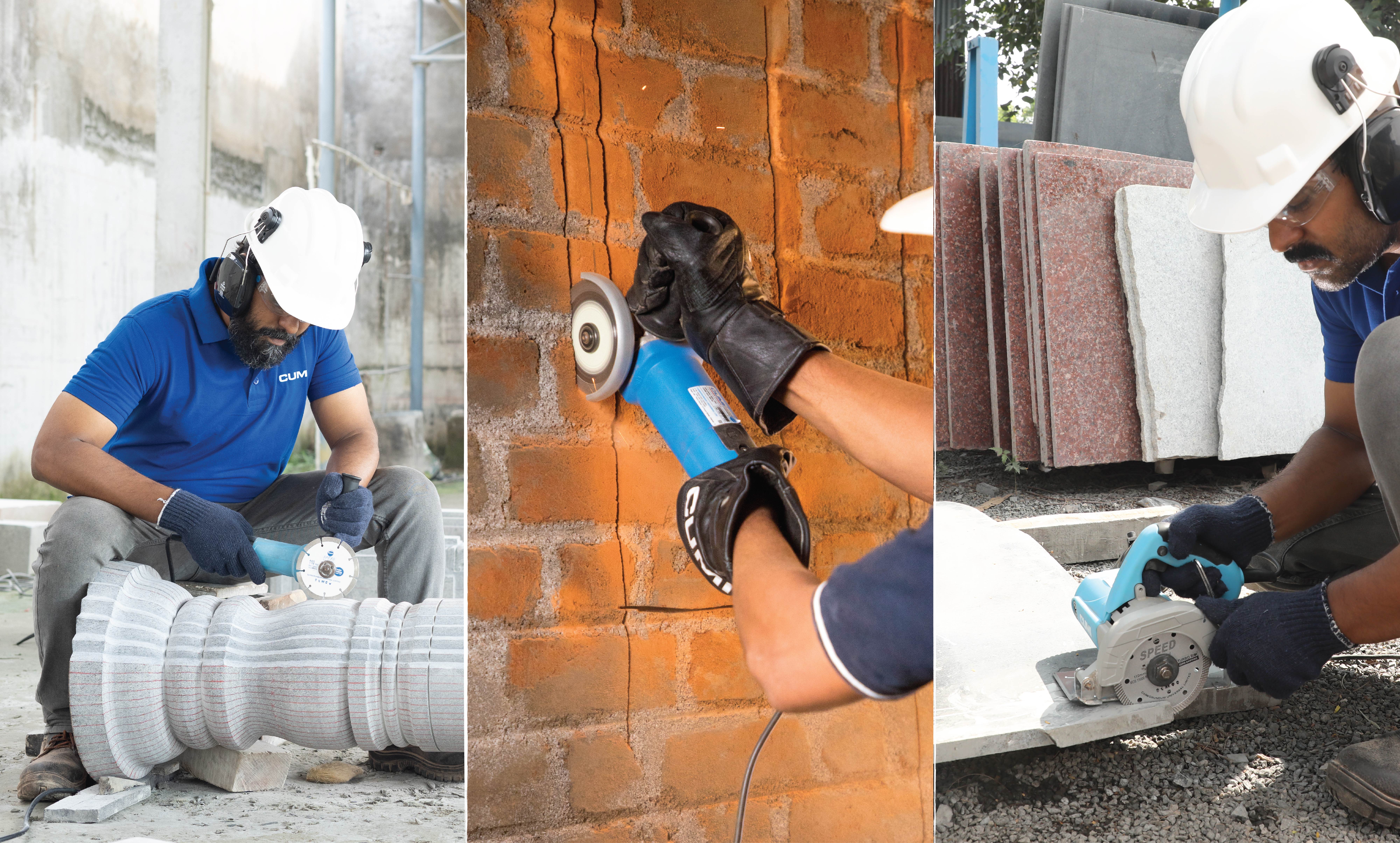
Diamond cutting blades play a critical role in construction, stone processing, infrastructure projects, and tile installation. Choosing the right type of diamond blade directly impacts cut quality, speed, blade life, and overall project cost.
This guide explains the three main types of diamond cutting blades—segmented, turbo, and continuous rim (rim blades)—and helps professionals select the right blade for each application.
Quick answer: There are three main diamond blade types:
- Segmented blades cut fastest and handle concrete, brick, asphalt and wall cutting, wet or dry.
- Turbo blades balance speed and finish for granite, marble and natural stone.
- Continuous rim blades give the cleanest, chip-free cut on ceramic and vitrified tiles, and work best wet.
Pick the blade by the material you’re cutting first, then by how clean the edge needs to be. CUMI, part of the Murugappa Group, makes all three types under its Speed, Boxer and Tezz ranges.
Why Choosing the Right Diamond Blade Matters
Using the wrong diamond blade can lead to:
- Excessive chipping or cracking
- Overheating and blade damage
- Poor cut finish
- Slower cutting speed
- Higher cost per cut
Professionals avoid these issues by matching blade design, segment type, and cutting method to the material being cut.
Diamond Cutting Blades: Segmented vs Turbo vs Rim Blades
Segmented Diamond Blades
What Is a Segmented Diamond Blade?
Segmented diamond blades have distinct segments with gaps around the rim. These gaps improve airflow and help remove debris during cutting.
Best Applications
- Concrete
- Asphalt
- Brick
- Granite
- Marble Stones
- Stone masonry
Key Advantages
- Very fast cutting speed
- Excellent heat dissipation
- Longer blade life in hard materials
- Ideal for dry and wet cutting
Recommended CUMI Segmented Blades
- Boxer Diamond Segmented Saw
- Speed Diamond Segmented Saw
- Speed 500 – Wall specialist
- Tezz All-Rounder Diamond Segmented Saw
Best suited for:
Heavy-duty construction, roadwork, and structural cutting where speed is more important than surface finish.
Wall Cutting Blades: Choosing a Diamond Blade for Wall Cutting
Wall cutting means cutting grooves into brick, block or plastered walls to lay electrical conduits and plumbing lines. It’s one of the most common diamond blade jobs on Indian construction sites.
Why segmented blades are the right choice for wall cutting:
- Brick, flyash brick, AAC blocks, plaster and concrete are all abrasive materials, and segmented blades handle them without glazing.
- Wall cutting is mostly done dry, and the gaps between segments let air cool the blade.
- The segments clear dust and debris fast, which keeps the groove clean and the cut straight.
- Speed matters more than a polished finish, because the groove gets plastered over.
What to look for in a wall cutting blade:
- A segmented rim built for brick and concrete, not a tile or rim blade.
- The right diameter for your machine. Most wall chasing in India is done with 4-inch (110 mm) and 5-inch (125 mm) cutters or twin-blade wall chasers.
- A bond built for abrasive materials, so the segments don’t wear out too quickly in red brick and plaster.
- Steady performance through mixed walls. Older walls often mix brick, mortar and patches of concrete.
Recommended CUMI blades for wall cutting:
- Speed 500 Wall Specialist: built specifically for wall cutting in concrete and brick.
- CUMI 500 RFT Diamond Segmented Saw and CUMI 500 RFT Blade: for long wall-cutting runs on site.
- Tezz All-Rounder Diamond Segmented Saw: for walls with mixed brick, block and concrete.
Wall cutting tips from professionals:
- Mark both groove lines clearly, and check for live wires and existing pipes before you cut.
- Cut in short passes rather than forcing full depth in one go.
- When cutting dry, lift the blade out every so often and let it spin free for a few seconds to cool.
- Use a wall chaser with dust extraction where possible. Brick and concrete dust contains silica, so wear a dust mask and eye protection.
Comparing diamond blades with TCT blades for wall work? Read our guide: TCT vs Diamond Blades for Wall Cutting: Which One Should You Buy?
Turbo Diamond Blades
What Is a Turbo Diamond Blade?
Turbo blades feature a serrated or wavy rim, offering a balance between cutting speed and smoothness.
Best Applications
- Marble
- Granite
- Natural stone
- Concrete tiles
Key Advantages
- Faster cutting than rim blades
- Cleaner finish than segmented blades
- Reduced vibration
- Suitable for both wet and dry cutting
Recommended CUMI Turbo Blade
- 110 MM DIAMOND SAW – TURBO SPEED
Best suited for:
Stone fabricators and contractors who need speed with an acceptable surface finish.
Rim Diamond Blades
What Is a Rim Blade?
Rim blades have a smooth, uninterrupted cutting edge, designed for precision and clean cuts.
Best Applications
- Ceramic tiles
- Marble slabs
Key Advantages
- Smoothest cut finish
- Zero chipping
- Ideal for wet cutting
- High precision
Recommended CUMI Rim Blade
Best suited for:
Tile installers, interior finishing contractors, and precision cutting jobs.
Which Diamond Blade for Which Material? A Quick Selection Guide
Most buyers start with the material they need to cut, not the blade type. Use this table to find the right blade:
| Material | Best Blade Type | Wet or Dry | Why | Recommended CUMI Blade |
| Concrete (plain) | Segmented | Both | Fast cutting and strong heat dissipation in hard material | Speed Diamond Segmented Saw, Boxer Diamond Segmented Saw |
| Reinforced concrete | Segmented | Both (wet preferred) | Handles hardness and abrasion; wet cutting extends blade life | Boxer Diamond Segmented Saw |
| Walls: red brick, flyash brick, AAC block, plaster | Segmented | Dry | Clears abrasive dust quickly during wall chasing | Speed 500 Wall Specialist, CUMI 500 RFT Diamond Segmented Saw |
| Mixed materials | Segmented (all-rounder) | Both | Copes with changing hardness without glazing | Tezz All-Rounder Diamond Segmented Saw |
| Granite | Turbo (finish) or segmented (speed) | Both | Turbo gives a cleaner edge; segmented cuts faster for rough work | Speed Diamond Segmented Saw |
| Marble, including Italian marble | Turbo or continuous rim | Wet preferred | Marble is softer and chips easily, so a smoother rim protects the edge | Speed Diamond Rim Saw, Speed Standard Ceramic Turbo |
| Kadappa and Tandur stone | Segmented or turbo | Both | Segmented for fast sizing; turbo when edges stay visible | Speed Diamond Segmented Saw |
| Vitrified and porcelain tiles | Continuous rim (narrow cut) | Wet preferred | A thin, continuous rim avoids chipping the glazed face | Speed Ceramic Narrow Cut |
| Ceramic tiles | Continuous rim | Wet preferred | Chip-free, precise edges | Speed Diamond Rim Saw, Speed Ceramic Narrow Cut |
| Asphalt | Segmented | Both | Asphalt is highly abrasive and wears blades fast | Boxer Diamond Segmented Saw for small patch cuts. For road-scale asphalt cutting, ask CUMI about dedicated blades. |
Simple rule of thumb:
- Hard and rough (concrete, brick, walls) → segmented
- Stone where the edge stays visible (granite, marble) → turbo
- Tiles and anything that chips easily → continuous rim
Struggling with chipped vitrified tiles? Read: Why Do Vitrified Tiles Chip When You Cut Them?
How Professionals Choose the Right Diamond Blade
Professionals consider:
- Material hardness
- Cutting method (wet or dry)
- Finish requirement
- Machine compatibility
Selecting the right blade improves productivity, safety, and blade life, while reducing downtime and rework.
Wet vs Dry Cutting with Diamond Blades: What’s the Difference?
Diamond blades can cut wet (with water cooling) or dry (air-cooled). Your choice affects blade life, cut quality, heat and dust.
| Factor | Wet Cutting | Dry Cutting |
| Cooling | Water keeps the blade and material cool | Relies on airflow, so heat builds faster |
| Blade life | Longer, because the diamonds and bond run cooler | Shorter, especially on long or deep cuts |
| Cut quality | Cleaner edges with less chipping | Good on rough work, but more chipping on tiles and stone |
| Dust | Water traps most of the dust | Heavy dust, including silica, so extraction and a mask are essential |
| Convenience | Needs a water supply and makes slurry | Quick and portable, with no water needed on site |
| Best for | Tiles, marble, granite, reinforced concrete | Wall chasing, brick, quick site cuts |
Which blade types suit wet or dry cutting?
- Segmented: both. The gaps act as cooling channels, which makes segmented blades the best choice for dry cutting.
- Turbo: both. Use wet cutting when finish matters on stone.
- Continuous rim: best wet. A solid rim has no gaps to release heat, so dry cutting needs short passes and frequent breaks.
Dry cutting tips to protect your blade:
- Cut in short bursts, then lift the blade and let it spin free for a few seconds to cool.
- Let the blade do the work and don’t force it. Too much pressure overheats the rim.
- Watch for warning signs: blue discolouration, sparks from the rim or a sudden drop in cutting speed mean the blade is overheating.
- Always wear a dust mask and eye protection, and use dust extraction where you can.
Running grinding operations as well? See our guide: Wet vs Dry Grinding: How to Choose the Right Method for Industrial Applications
Common Mistakes to Avoid When Using Diamond Cutting Blades
- Using continuous rim blades for dry concrete cutting
- Using segmented blades for tile or glass
- Ignoring cooling requirements
- Applying excessive pressure instead of letting the blade cut
Conclusion
Understanding the difference between segmented, turbo, and continuous rim diamond blades helps professionals achieve faster cuts, cleaner finishes, and longer blade life.
The right blade choice is not just about cutting—it’s about efficiency, safety, and long-term cost savings.
Find the Right CUMI Diamond Blade for Your Job
CUMI (Carborundum Universal), part of the 124-year-old Murugappa Group, has made abrasives since 1954. Its diamond blades are built for Indian job sites, from wall chasing and concrete cutting to granite fabrication and tile fitting.
- Browse all diamond blades: CUMI Cutting Blades
- Download the catalogue: CUMI Product Catalogs
- Not sure which blade fits? Call 1800 3000 1131 (toll-free) or contact our team for help choosing the right blade for your material and machine.
Frequently Asked Questions (FAQs)
- What is the difference between segmented and turbo diamond blades?
Segmented blades have gaps between segments that allow faster cutting and better heat dissipation, making them ideal for hard materials like concrete and asphalt. Turbo blades have a serrated continuous rim that balances speed with a smoother finish, making them better suited for stone and granite where surface quality matters. - What is the difference between segmented and continuous rim (rim) diamond blades?
Segmented blades cut faster but leave a rougher edge — best for structural and outdoor cutting. Continuous rim blades cut slower but produce a chip-free, precision finish—best for ceramic tiles and marble slabs, where clean edges are critical. - Which diamond blade type cuts the fastest?
Segmented diamond blades cut the fastest among the three types. The gaps between segments improve airflow, remove debris quickly, and prevent overheating — all of which contribute to aggressive, high-speed cutting in concrete, brick, and asphalt. - Can a turbo diamond blade be used for concrete cutting?
Yes, turbo blades can cut concrete, but segmented blades are a better choice for heavy concrete work. Turbo blades are more suited for concrete tiles, natural stone, and granite, where you need a balance of speed and finish quality. - Which blade gives a chip-free cut—segmented, turbo, or rim?
Continuous rim (rim) blades give the cleanest, chip-free cut. They are specifically designed for precision cutting of ceramic tiles, marble, and delicate stone surfaces where chipping is not acceptable. - What is a turbo rim diamond blade?
A turbo rim blade combines features of both turbo and rim designs—it has a serrated or wavy continuous edge that offers faster cutting than a standard rim blade while still producing a relatively smooth finish. It is commonly used for marble, granite, and concrete tiles. - Can segmented diamond blades be used for dry cutting?
Yes, segmented blades are suitable for both wet and dry cutting. The gaps between segments act as cooling channels, making them one of the few blade types that perform well without water cooling — ideal for job sites where water access is limited. - Which diamond blade is best for reinforced concrete?
Segmented diamond blades are the best choice for reinforced concrete. Their aggressive cutting action, strong heat dissipation, and longer blade life make them suited to handle the hardness and abrasiveness of reinforced concrete structures. - Which blade is best for mixed materials?
Segmented blades, particularly all-rounder variants like the CUMI Tezz All-Rounder, are best suited for cutting mixed materials. Their design handles varying hardness levels without the blade glazing over or losing cutting efficiency. - What is the difference between turbo and segmented blades for stone cutting?
For stone cutting, turbo blades are generally preferred over segmented blades because they deliver a smoother surface finish on granite, marble, and natural stone. Segmented blades can cut stone faster but may leave rougher edges that require additional finishing work. - Which blade is best for wall cutting?
A segmented diamond blade built for brick and concrete is best. The CUMI Speed 500 Wall Specialist is designed specifically for wall chasing. - Can I use the same diamond blade for granite and tiles?
It’s not recommended. Granite blades are coarser and chip tile edges. Use a continuous rim blade such as the CUMI Speed Ceramic Narrow Cut for tiles. - Is wet or dry cutting better with diamond blades?
Wet cutting gives longer blade life, cleaner cuts and less dust. Dry cutting is quicker on site and works well with segmented blades for walls and brick.
CUMI Abrasives, part of Carborundum Universal Limited, is headquartered at Dare House Extension, 4th Floor, 234, NSC Bose Road, Chennai 600001, Tamil Nadu, India. For customer support, reach us at +91 4430006184, or contact our sales team at +91 78 4512 1555. For general enquiries, write to us at the CUMI enquiry email.