
Every Grinding Cycle Has a Cost
In modern automotive manufacturing, crankshaft grinding is a precision finishing process where productivity and dimensional accuracy must coexist. Every dressing cycle, wheel replacement, and machine stoppage reduces productive machining time and increases manufacturing cost. Progressive manufacturers therefore evaluate grinding operations using operational KPIs such as Cost Per Component (CPC), Overall Equipment Effectiveness (OEE), machine availability, and wheel life rather than the purchase price of the grinding wheel alone.
The Manufacturing Challenge
A leading crankshaft manufacturer sought to improve grinding productivity while maintaining quality. Although the existing process consistently met dimensional requirements, frequent dressing interrupted production and limited machine utilization. The objective was to improve process efficiency without changing the production line.
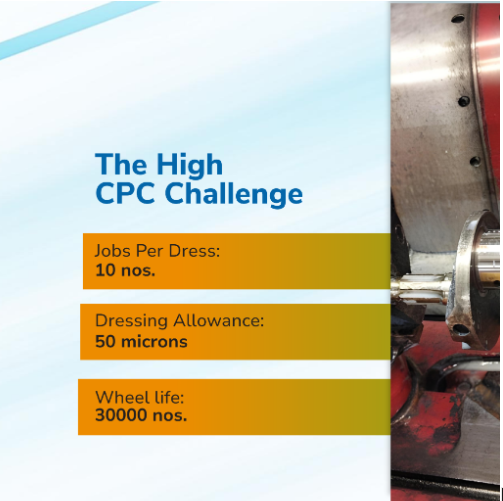
Figure 1: Existing grinding process
Engineering the Solution
CUMI recommended an application-specific ceramic grain grinding wheel designed to deliver sustained cutting performance over longer production runs. Ceramic abrasive technology continually exposes fresh cutting edges, helping reduce wheel wear, improve process stability, and extend the interval between dressing cycles. This engineering-led approach focused on improving the complete grinding process rather than simply replacing a consumable.
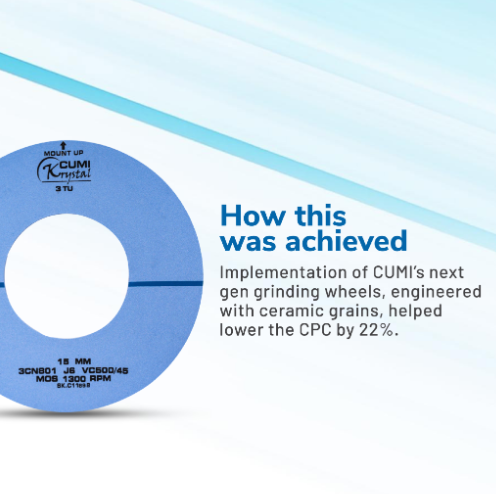
Figure 2: Ceramic grain grinding wheel technology
Measured Improvements
The optimized grinding solution delivered measurable improvements. Jobs completed between dressing cycles increased, dressing allowance was reduced, and wheel life improved significantly. Together these improvements contributed to a reported 22% reduction in cost per component, demonstrating the value of engineering-led process optimization.
| Parameter | Before | After |
|---|---|---|
| Jobs per Dress | 10 | 14 |
| Dressing Allowance | 50 µm | 40 µm |
| Wheel Life | 30,000 | 39,500 |
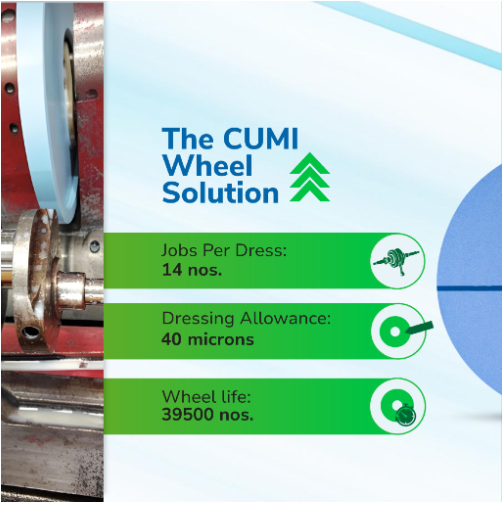
Figure 3: Measured production improvements
Why These Improvements Matter
Longer wheel life reduces tooling consumption and operator intervention. Fewer dressing cycles increase productive machine time and improve equipment utilization. These benefits contribute directly to higher throughput, lower manufacturing cost, and improved operational efficiency using existing assets.
Industry 4.0 Perspective
Industry 4.0 is about using operational data to drive smarter manufacturing decisions. Grinding operations generate valuable KPIs, including wheel life, dressing frequency, machine availability, OEE, and cost per component. Monitoring these metrics helps manufacturers reduce downtime, improve productivity, and support continuous improvement programs without major capital investment.
Engineering Perspective
Every grinding application is unique. Workpiece material, machine capability, wheel specification, bond technology, dressing conditions and coolant application all influence performance. The improvements presented here are based on measured production results from an actual crankshaft grinding application. CUMI’s application engineers evaluate the complete grinding process, recommend application-specific solutions and validate improvements through controlled production trials. This engineering approach demonstrates experience, technical expertise, measurable performance and trustworthy decision-making based on objective manufacturing KPIs.
Customer Outcome
The implementation illustrates how engineering-led abrasive selection can improve manufacturing efficiency, extend wheel life, and reduce cost per component while maintaining product quality. It reinforces that process optimization often delivers substantial gains without major equipment changes.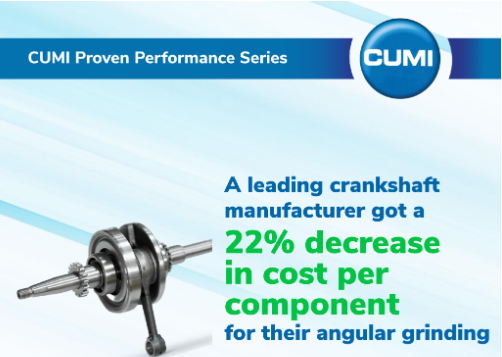
Figure 4: Customer implementation summary
Key Takeaways
- Measure grinding performance using cost per component.
- Track wheel life and dressing frequency as productivity KPIs.
- Select application-specific abrasive technology rather than comparing wheel price alone.
- Use engineering validation and production trials to confirm improvements.
- Support Lean Manufacturing and Industry 4.0 through continuous process optimization.
Frequently Asked Questions
Why is cost per component important?
It measures the real manufacturing cost by considering productivity, downtime, and tooling performance.
Why does dressing frequency matter?
Reducing dressing frequency increases machine availability and throughput.
How does abrasive selection influence productivity?
The right wheel specification improves wheel life, process stability, and manufacturing efficiency.
Conclusion
Optimising grinding wheel technology is one of the most effective ways to improve manufacturing performance. By combining application engineering, measurable production data, and Industry 4.0 performance metrics, manufacturers can reduce cost per component while maintaining quality and increasing productivity.