

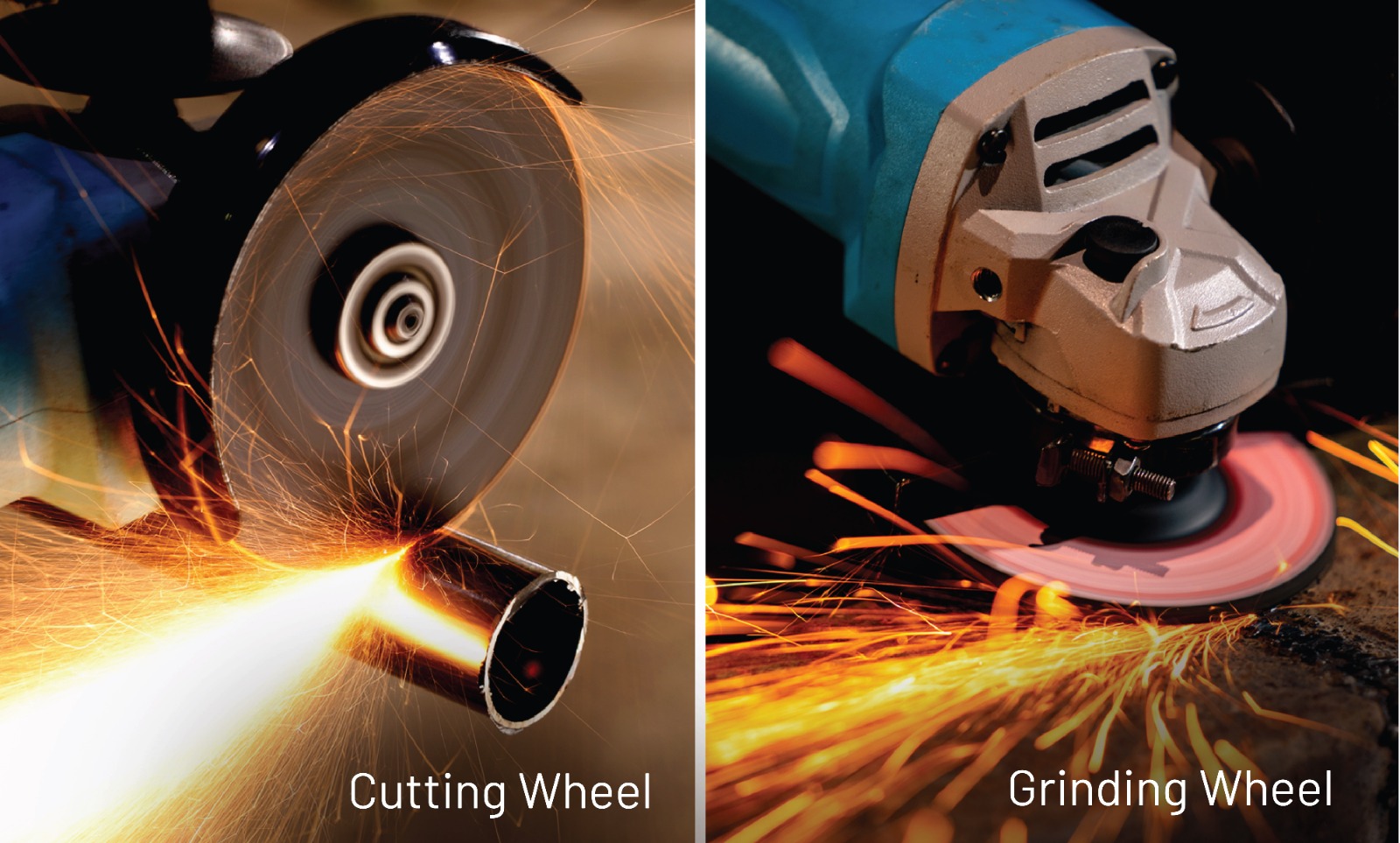
Metal fabrication, construction, and maintenance activities often require both cutting and grinding operations. Although cutting wheels and grinding wheels may appear similar, they are designed for different purposes and should not be used interchangeably.
Understanding the differences between these abrasive wheels helps improve productivity, achieve better results, and ensure the right tool is selected for each application.
What Is a Cutting Wheel?
A cutting wheel is a thin bonded abrasive wheel designed to cut through metal and other materials. It removes material by using the edge of the wheel to create a narrow cut or kerf.
Cutting wheels are commonly used for the following:
- Cutting steel bars and rods
- Cutting pipes and tubes
- Sectioning metal profiles
- Cutting sheet metal
- Maintenance and repair applications
Because of their thin construction, cutting wheels can produce fast, precise cuts while minimizing material loss.
What Is a Grinding Wheel?
A grinding wheel is a thicker bonded abrasive wheel designed for material removal and surface preparation. It removes material by applying the face of the wheel to the workpiece.
Grinding wheels are commonly used for:
- Weld removal
- Deburring metal edges
- Surface levelling
- Removing rust and scale
- Preparing surfaces before coating
- Edge blending and finishing
Their thicker construction allows them to withstand the side pressure generated during grinding operations.
Cutting Wheel vs Grinding Wheel: What Is the Difference?
Although both are abrasive wheels, they differ in design, application, and operating method.
Parameter | Cutting Wheel | Grinding Wheel |
Primary Purpose | Cutting and sectioning | Material removal and finishing |
Wheel Thickness | Thin | Thicker |
Material Removal Method | Edge cutting | Surface grinding |
Side Pressure Resistance | Low | High |
Surface Finishing Capability | Limited | Good |
Material Removal Rate | Low | High |
Typical Applications | Bars, pipes, sheets, profiles | Welds, burrs, edges and surfaces |
The most important distinction is that cutting wheels separate material, while grinding wheels shape, smooth, and prepare surfaces.
Industry Perspective: Abrasive Selection in Industry 4.0 Manufacturing
As manufacturing operations become increasingly automated and data-driven, abrasive wheel selection affects more than cutting or grinding performance. The right wheel can contribute to process consistency, reduced rework, and lower production interruptions.
For manufacturers focusing on operational efficiency, selecting application-specific cutting and grinding wheels can help support the following:
- Improved process repeatability
- Reduced wheel change frequency
- Better Overall Equipment Effectiveness (OEE)
- More consistent surface quality across production batches
In modern manufacturing environments, abrasive tools are increasingly considered an important part of achieving stable and efficient production processes.
How Does a Cutting Wheel Work?
A cutting wheel removes material by rotating at high speed and allowing its thin edge to penetrate the workpiece.
The narrow cutting action offers several advantages:
- Faster cutting performance
- Reduced material wastage
- Cleaner and more controlled cuts
- Less heat generation compared to wider cutting methods
This makes cutting wheels suitable for fabrication, maintenance, and metalworking operations where accurate cutting is required.
How Does a Grinding Wheel Work?
A grinding wheel removes material by bringing its abrasive surface into contact with the workpiece.
As the abrasive grains cut the surface, the wheel can:
- Remove excess material
- Smooth uneven surfaces
- Blend welded joints
- Prepare surfaces for finishing processes
- Remove corrosion and scale
Grinding wheels are widely used when surface quality and material shaping are equally important.
When Should You Use a Cutting Wheel?
A cutting wheel is the preferred choice when the objective is to separate or cut material.
Typical applications include the following:
- Cutting steel rods
- Cutting pipes and tubes
- Trimming fabricated components
- Cutting structural sections
- Sectioning sheet metal
Whenever the task requires producing a clean and narrow cut, a cutting wheel is generally the appropriate solution.
When Should You Use a Grinding Wheel?
A grinding wheel should be used when material needs to be removed from a surface rather than cut through.
Typical applications include:
- Removing weld beads
- Deburring sharp edges
- Levelling uneven surfaces
- Cleaning rusted metal
- Surface preparation before painting or coating
- Blending fabricated joints
Grinding wheels are particularly useful when surface quality and finishing requirements are important.
Can a Grinding Wheel Be Used for Cutting?
Grinding wheels are designed primarily for material removal and surface preparation. They are not intended for cutting through metal components.
Using a grinding wheel for cutting may
- Produce slower cutting performance
- Generate excessive heat
- Result in wider cuts
- Deliver less controlled cutting results
Selecting a wheel designed specifically for cutting usually produces better outcomes.
Can a Cutting Wheel Be Used for Grinding?
Cutting wheels are primarily designed for edge cutting and are not intended to withstand the side pressure generated during grinding operations.
Using a cutting wheel for grinding can
- Reduce wheel performance
- Produce uneven results
- Increase wheel wear
- Affect operational efficiency
For grinding applications, a grinding wheel is generally the more suitable choice.
How to Choose Between a Cutting Wheel and a Grinding Wheel
Selecting the right wheel depends on the intended application.
Choose a cutting wheel if you need to:
- Cut metal bars
- Section pipes and tubes
- Trim profiles and sheets
- Produce narrow, controlled cuts
Choose a grinding wheel if you need to:
- Remove excess material
- Smooth surfaces
- Remove welds and burrs
- Prepare surfaces before finishing
- Blend and shape metal components
Understanding the desired outcome before selecting the wheel helps improve productivity and achieve more consistent results.
Common Mistakes to Avoid
Using a Grinding Wheel for Material Separation
Grinding wheels are designed for material removal rather than efficient cutting applications.
Using a Cutting Wheel for Surface Grinding
Cutting wheels are intended for cutting operations and are not designed for prolonged side pressure.
Choosing the Wrong Wheel Thickness
Wheel thickness influences cutting speed, material removal, and overall application performance.
Applying Excessive Pressure
Excessive force can increase heat generation and reduce abrasive efficiency.
Ignoring Application Requirements
Selecting abrasive wheels based solely on availability rather than application needs can affect productivity and surface quality.
How Are Cutting and Grinding Wheels Evolving in Industry 4.0 Manufacturing?
Manufacturing environments are becoming increasingly connected, automated, and data-driven. In these settings, cutting and grinding wheels are no longer viewed solely as consumable tools. Their performance can influence production efficiency, process consistency, and machine utilization.
For example, selecting the appropriate wheel for a specific application can help:
- Reduce rework and scrap generation
- Improve process repeatability across production batches
- Minimise wheel change frequency and machine downtime
- Support more consistent surface quality
- Contribute to higher Overall Equipment Effectiveness (OEE)
As manufacturers adopt Industry 4.0 practices, abrasive selection increasingly becomes part of broader operational objectives such as productivity improvement, quality control, and efficient resource utilization. Choosing the right cutting or grinding wheel is therefore not only a technical decision but also an important contributor to more predictable and efficient manufacturing processes.
Conclusion
Cutting wheels and grinding wheels perform different but equally important functions in metalworking applications. Cutting wheels are designed to separate material quickly and efficiently, while grinding wheels are intended for material removal, surface preparation, and finishing operations.
Choosing the appropriate abrasive wheel based on the application helps improve performance, achieve better surface quality, and support more efficient fabrication and maintenance processes.