

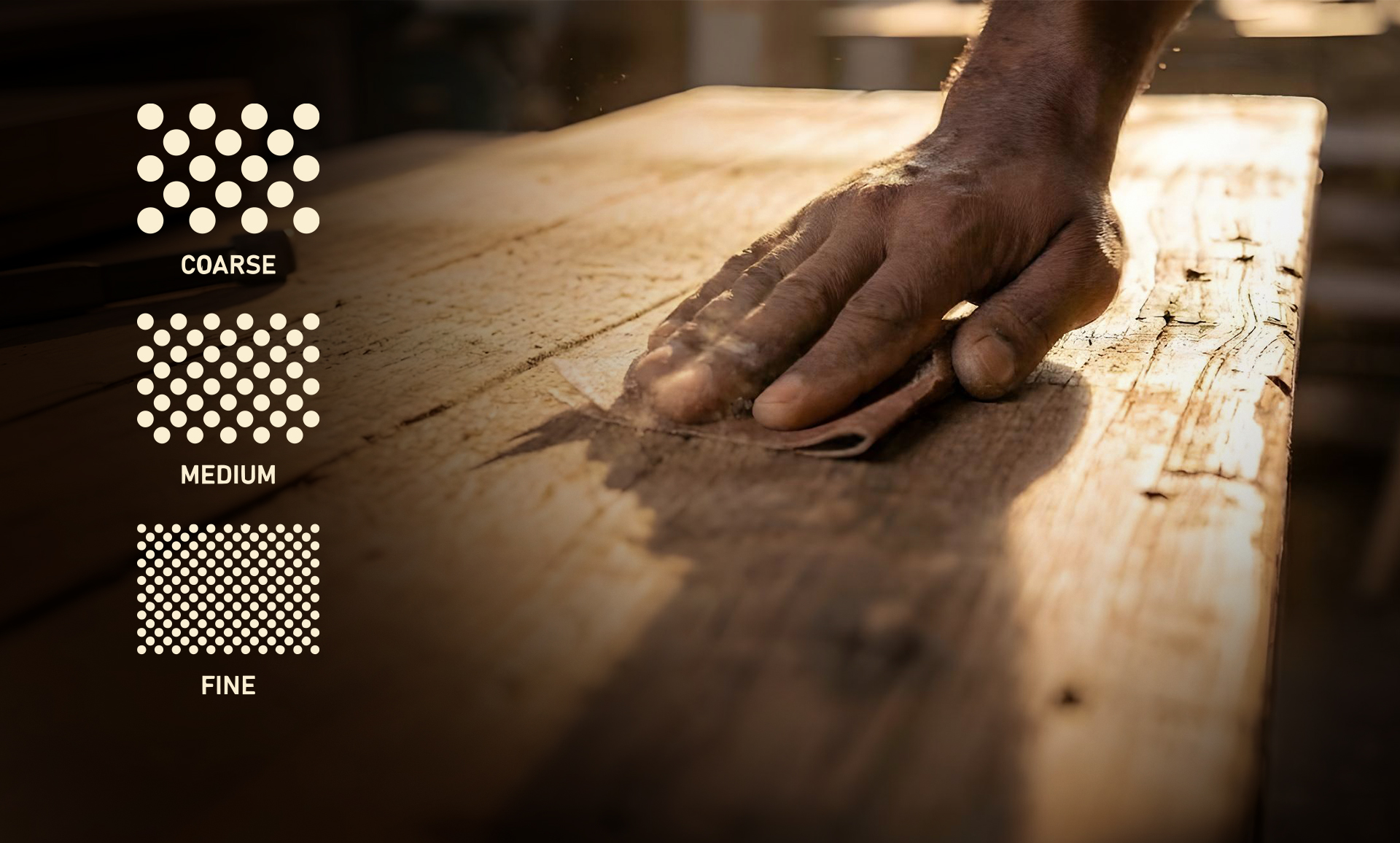
A practical guide for selecting the right sandpaper for wood furniture. This article explains sanding stages, grit progression, abrasive materials, and sanding techniques commonly used in professional woodworking and furniture restoration.
Why Sandpaper Selection Matters in Furniture Refinishing
Sandpaper selection determines how efficiently old finishes are removed and how smooth the final wood surface becomes. Choosing the correct abrasive allows restorers to remove varnish, lacquer, or paint while preserving the natural grain of the wood.
Furniture restoration involves controlled material removal. Coarse abrasives remove finishes quickly but leave deeper scratches. Fine abrasives smooth the wood surface and prepare it for staining, polishing, or painting.
Professional restorers therefore follow a progressive sanding sequence, moving gradually from coarse to fine grit abrasives so that each sanding stage removes the scratch pattern created by the previous grit.
Typical Sanding Stages in Furniture Restoration
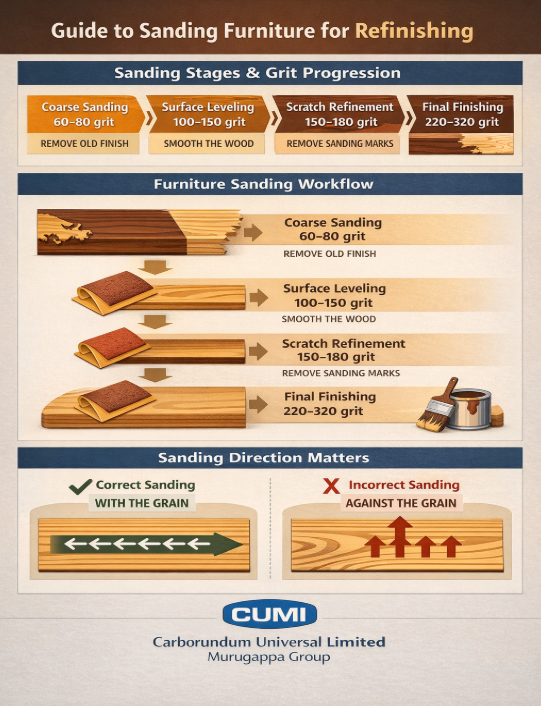
Furniture refinishing usually involves three sanding stages that progressively refine the wood surface.
Finish / Paint Removal
Coarse abrasives remove old coatings such as paint, varnish, or lacquer.
Recommended grit range: 60–80 grit
This stage focuses on removing existing finishes and exposing the bare wood surface.
Surface Leveling
Medium grit abrasives smooth the exposed wood surface and remove sanding marks from coarse abrasives.
Recommended grit range: 100–150 grit
This stage helps level the wood surface before final finishing.
Final Surface Preparation
Fine grit abrasives prepare the wood surface for staining, polishing, or painting.
Recommended grit range: 180–320 grit
This stage produces a smooth surface and removes micro-scratches.
Recommended Sandpaper Grit Progression
Grit Range | Purpose | Typical Application |
60–80 | Heavy coating removal | Removing paint, varnish, lacquer |
100–120 | Surface leveling | Preparing exposed wood |
150–180 | Scratch refinement | Removing marks from coarse sanding |
220–320 | Final finishing | Preparing wood for staining or painting |
Skipping grit levels may leave visible scratches in the final finish. Gradual grit progression ensures consistent surface quality. Common Abrasive Materials Used for Sanding Wood
Different abrasive materials influence cutting performance and sanding durability.
Abrasive Material | Characteristics | Typical Use |
Aluminum Oxide | Durable abrasive grains with aggressive cut rate | General woodworking sanding |
Silicon Carbide | Sharp cutting grains | Fine finishing and polishing |
Garnet | Natural abrasive producing smooth finish | Traditional woodworking sanding |
Aluminum oxide is commonly used in furniture refinishing because it balances durability with a consistent scratch pattern suitable for wood surfaces.
Hand Sanding vs Power Sanding
Furniture restoration often combines both sanding approaches.
Power sanding
Random orbital sanders are commonly used for sanding large flat surfaces such as tabletops, cabinet panels, and doors. They remove coatings efficiently while maintaining relatively uniform scratch patterns.
Hand sanding
Hand sanding is typically used for:
- edges and corners
- Intricate and contour surfaces
- curved furniture surfaces
- carved wood details
- decorative moldings
Using sanding blocks during hand sanding helps distribute pressure evenly and maintain flat surfaces.
Combining machine sanding with hand sanding allows restorers to maintain efficiency while preserving detailed furniture features.
Best Practices for Sanding Wood Furniture
Following proper sanding practices improves both surface quality and finishing durability.
- Progress gradually through grit levels instead of skipping sanding stages
- Sand along the direction of the wood grain to prevent visible scratches
- Replace worn sandpaper regularly to maintain cutting efficiency
- Use sanding blocks to distribute pressure evenly
- Remove sanding dust completely before applying stain or paint
Consistent sanding technique helps produce a smooth and uniform finish across the entire furniture surface.
Expert Insight
Proper sanding preparation also improves the way stains, oils, and coatings penetrate the wood surface.
Manufacturers of industrial abrasives and woodworking tools often recommend controlled grit progression because it improves both surface finish quality and coating durability.
Frequently Asked Questions
1. What sandpaper number is best for wood furniture?
Wood furniture sanding usually starts with 60–80 grit for removing paint or varnish, moves to 100–150 grit for surface leveling, and finishes with 180–320 grit before staining, polishing, or painting. Lower numbers remove material faster while higher numbers create smoother finishes.
2. Which sandpaper is best for wood polishing?
For wood polishing, fine grit sandpaper between 180 and 320 grit is commonly used. These grits help smooth the surface and remove minor scratches before applying polish, stain, oil, or protective coatings.
3. What grit sandpaper should be used to remove varnish from wood furniture?
Removing varnish generally begins with 60–80 grit sandpaper to strip the old finish. After removal, the surface can be refined using 100–150 grit and finished with finer grits for polishing.
4. Is aluminum oxide or garnet sandpaper better for furniture refinishing?
Aluminum oxide sandpaper is usually preferred for furniture refinishing because it offers better durability and longer life. Garnet sandpaper can provide a smoother finish and is often used for traditional woodworking projects.
5. Can the same sandpaper be used for sanding and finishing wood?
No. Coarse sandpaper used for removing paint or leveling surfaces can leave scratches. Final finishing requires finer grit sandpaper to prepare the wood for staining, polishing, or painting.
6.What is the best grit for sanding wood?
For most wood, start with 100–120 grit and finish with 180–220 grit. Drop to 60–80 grit only when stripping paint or varnish.
About the Author
This article was prepared by the CUMI Abrasives technical team, part of the Murugappa Group, a manufacturing conglomerate with more than a century of experience in materials engineering and industrial abrasives.
CUMI develops abrasive solutions used across industries, including metalworking, automotive manufacturing, woodworking, and surface finishing. The insights shared in this article reflect practical knowledge of abrasive materials and finishing processes used in both industrial and workshop environments.