

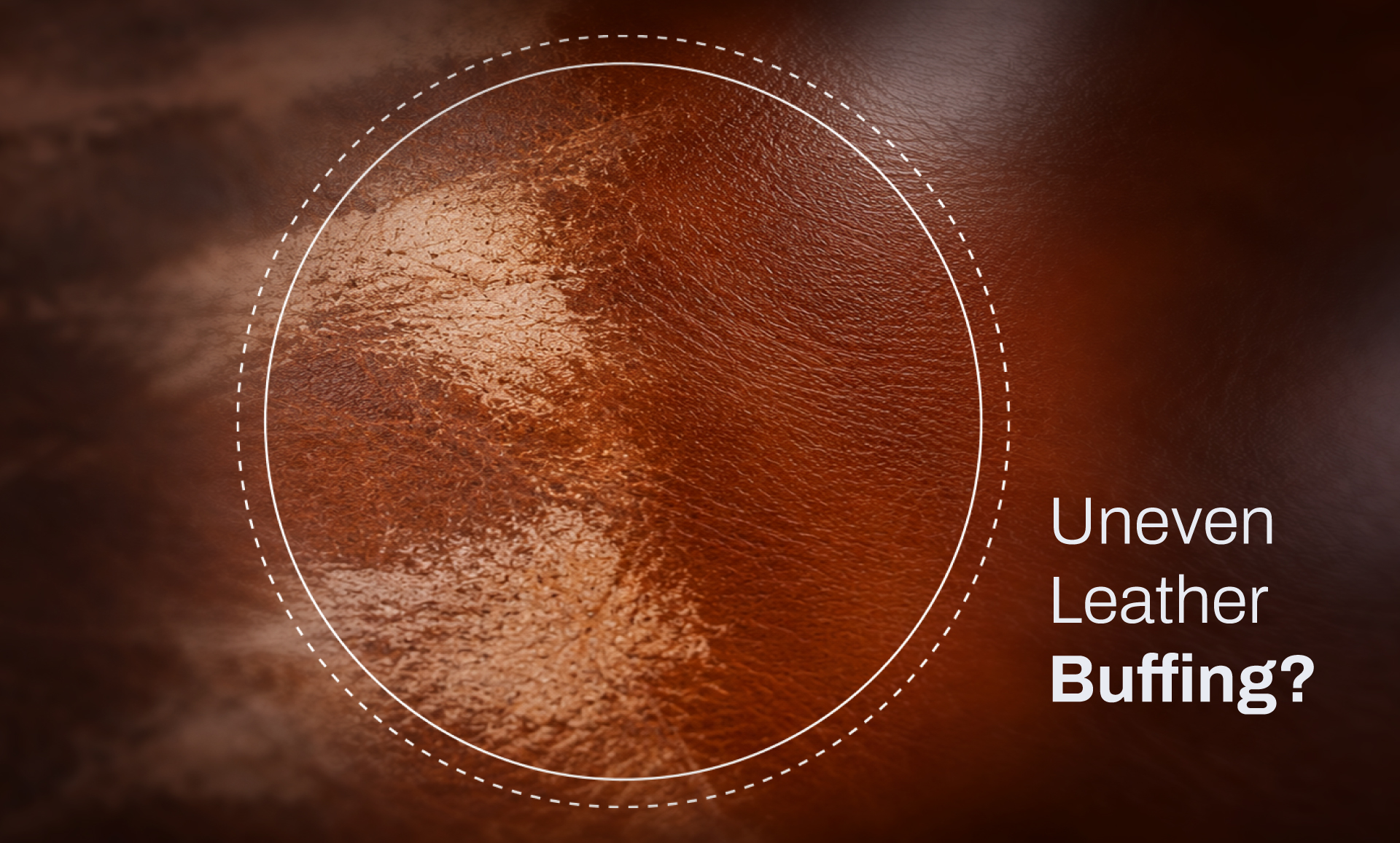
Quick answer: An uneven finish in leather buffing is usually caused by worn or loaded buffing paper, the wrong grit size, uneven grain coating on the abrasive, poor paper mounting, or leather with uneven moisture and thickness. The fix is to use a sharp, evenly coated silicon carbide buffing paper, choose the right grit for the leather type, change the paper before it loads, and keep machine settings consistent. CUMI coated abrasives, including silicon carbide paper rolls made for buffing and snuffing leather, help tanneries get a smooth, uniform nap and surface on every hide, with fewer rejects and less re-buffing.
Why Does Leather Buffing Give an Uneven Finish?
Leather buffing, also called snuffing, is one of the most important finishing steps in a tannery. It’s done on a buffing machine where a roller wrapped with abrasive paper lightly sands the grain or flesh side of the hide. The goal is a uniform surface: a soft, even nap on suede and nubuck, or a clean, level grain for corrected grain leather that will take finish coats evenly. When buffing goes wrong, the defects show up immediately and often can’t be hidden later in finishing.
Here are the most common reasons tanneries get an uneven buffing finish:
- Worn or dull buffing paper. As the abrasive grains wear down, the paper starts rubbing instead of cutting. This leaves shiny, burnished patches and a nap that’s thick in some areas and flat in others.
- Loaded paper. Leather dust and fat build up between the grains and block the cutting surface. A loaded paper cuts unevenly across the width of the roller, which shows up as streaks and patchy areas across the hide.
- Wrong grit size. Too coarse a grit leaves deep scratches and a rough, hairy nap. Too fine a grit polishes instead of buffing and can’t open the fibres properly, especially on heavy or firm leather.
- Uneven abrasive coating. Low-quality paper with uneven grain spread cuts harder in some spots than others. Even the best machine and the most skilled operator can’t get a uniform finish from inconsistent paper.
- Poor paper mounting. Loose, wrinkled or badly joined paper on the roller creates lines, bands and chatter marks at regular intervals along the hide.
- Uneven leather condition. Hides with uneven moisture, thickness or fat content buff differently in different areas, even with the same paper and machine settings. Poor shaving before buffing makes this worse.
The good news is that most of these problems come down to the abrasive and how it’s used. Fix the paper and the process, and most uneven buffing problems disappear.
What Is the Best Abrasive for Leather Buffing?
For most leather buffing work, silicon carbide (SiC) coated abrasive paper is the preferred choice in tanneries. Silicon carbide grains are very sharp and hard, and they fracture to create fresh cutting edges as they work. This gives a clean, fast cut on leather fibres without tearing or burning the surface.
Here’s why silicon carbide paper works well for leather buffing:
- Sharp cutting action opens leather fibres cleanly for a fine, even nap on suede and nubuck instead of pulling or tearing them.
- Self-sharpening grains keep cutting consistently over a longer run, so the finish on the last hide of the shift matches the first.
- Wide grit range lets tanneries match the paper to every stage, from heavy flesh-side buffing to fine grain snuffing for premium leather.
CUMI, part of the Murugappa Group and the company that pioneered coated abrasives manufacturing in India, makes silicon carbide paper rolls that are used for buffing and snuffing suede leather. These rolls are available in 50 metre lengths, in widths such as 10 inch (254 mm) and 24 inch (610 mm), and in a wide grit range from coarse 50 grit up to very fine 800 grit, so tanneries can cover every buffing job with one trusted brand.
Common Leather Buffing Defects and How to Fix Them
| Defect | Likely Cause | How to Fix It |
|---|---|---|
| Shiny or burnished patches | Dull or worn buffing paper rubbing the surface | Change to fresh, sharp CUMI silicon carbide paper. |
| Streaks across the hide | Loaded paper or uneven abrasive coating | Clean or replace the paper; use evenly coated paper. |
| Lines or bands at regular gaps | Wrinkled, loose or badly joined paper on the roller | Remount the paper tightly and evenly; check the joint. |
| Rough, hairy nap | Grit too coarse for the leather type | Move to a finer grit for the final pass. |
| Flat, dead nap | Grit too fine or paper glazed | Use a slightly coarser grit and change the paper sooner. |
| Patchy buffing on one hide | Uneven moisture, thickness or fat in the leather | Improve shaving and drying before buffing. |
How to Get an Even Leather Buffing Finish: CUMI’s 5-Step Guide
Follow these steps to get a smooth, uniform finish and reduce re-buffing in your tannery:
Step 1: Check the Leather Before Buffing
Make sure hides are evenly shaved, dried to a consistent moisture level and conditioned properly. Even the best buffing paper can’t fix leather that’s thick in one area and thin in another, or wet in patches. Good preparation is the foundation of an even buffing finish.
Step 2: Choose the Right Grit for the Job
Pick the grit based on the leather type and the finish you want. As a general guide, coarser grits are used for flesh-side buffing and heavy suede work, medium grits for general suede and splits, and finer grits for nubuck and corrected grain snuffing, where a smooth, tight surface is needed. Many tanneries use two passes, a coarser grit first and a finer grit to finish. CUMI’s wide silicon carbide grit range makes it easy to set up the right sequence.
Step 3: Mount the Paper Correctly
Wrap the CUMI buffing paper tightly and evenly around the roller with no wrinkles, slack or bubbles. Make sure the joint is clean and flat so it doesn’t leave a mark on every rotation. A well-mounted paper is one of the simplest ways to avoid lines and banding on the hide.
Step 4: Keep Machine Settings Consistent
Set the roller pressure, feed speed and contact evenly across the full width of the machine. Uneven pressure from one side to the other is a common cause of a hide that’s buffed well on one edge and under-buffed on the other. Check settings at the start of every shift and after every paper change.
Step 5: Change Paper Before It Loads or Wears Out
Don’t wait for defects to appear. Watch for early signs like more dust staying on the paper, a slight shine on the leather or a change in nap feel. Changing paper on time costs far less than re-buffing or downgrading finished hides.
Tips for Better Leather Buffing Results
- Keep dust extraction working well. Good extraction removes buffing dust from the paper and the hide, which reduces loading and keeps the cut clean and even.
- Store paper rolls properly. Keep CUMI paper rolls in a dry, cool place away from humidity, which can make the backing curl or weaken and affect how evenly it mounts.
- Use the same paper brand and grit consistently. Switching between different papers changes the cut and the finish, making it harder to match lots for the same customer.
- Test on a sample piece. Before running a full batch, buff a test piece to check nap, colour uptake and feel. This catches grit or setting problems early.
- Train operators to spot early defects. Operators who know the signs of dull or loaded paper can act before a whole lot is affected.
Where CUMI Coated Abrasives Help Tanneries Most
Tanneries and leather finishers use CUMI coated abrasives for even, consistent buffing in:
- Suede and split leather, where a fine, uniform nap decides the grade and price of the leather
- Nubuck leather, where a soft, velvety surface needs very fine and consistent buffing
- Corrected grain leather, where a level surface helps finish coats stick evenly and look uniform
- Footwear and shoe upper leather, where customers expect matching texture across every pair
- Leather goods, garments and upholstery leather, where appearance and feel are key quality checks
Why Tanneries Choose CUMI
CUMI (Carborundum Universal Limited) pioneered the manufacture of coated abrasives in India and has been serving Indian industry for decades as part of the Murugappa Group. Its coated abrasives range, including silicon carbide paper rolls, abrasive belts and specialty papers, is built for consistent grain coating and reliable performance in demanding production environments like leather clusters in Tamil Nadu, Kanpur and Kolkata.
CUMI’s application support team can work with your tannery to choose the right grit sequence, improve paper life and solve specific buffing problems, so you get a more uniform finish and fewer rejected hides.
Frequently Asked Questions
Why is my leather buffing finish uneven?
The most common causes are dull or loaded buffing paper, the wrong grit size, uneven abrasive coating, poorly mounted paper, or hides with uneven moisture and thickness. Fixing the paper and machine setup solves most problems.
Which abrasive is best for leather buffing?
Silicon carbide coated abrasive paper is the most widely used choice for leather buffing because its sharp, self-sharpening grains cut leather fibres cleanly and give an even nap.
What grit is used for buffing suede and nubuck?
Suede usually uses coarse to medium grits, while nubuck and corrected grain snuffing use finer grits for a smoother surface. The exact grit depends on the leather type, thickness and the finish your customer wants.
How often should buffing paper be changed?
Change buffing paper as soon as you see signs of loading, shine on the leather or a change in nap feel. Waiting too long leads to uneven finish and costly re-buffing.
What causes lines on leather after buffing?
Lines or bands at regular gaps are usually caused by wrinkled, loose or badly joined paper on the buffing roller. Remounting the paper tightly and evenly normally fixes it.
Does CUMI make buffing paper for leather?
Yes. CUMI makes silicon carbide paper rolls used for buffing and snuffing suede leather, available in multiple widths and a wide grit range.
Get a Smoother, More Even Leather Finish With CUMI
Stop losing hides to patchy, uneven buffing. Talk to CUMI’s coated abrasives experts to find the right buffing paper and grit sequence for your tannery. Call our toll-free number 1800 3000 1131 or download the full product catalogue.