

The Role of Abrasive Materials in Sandpaper Performance
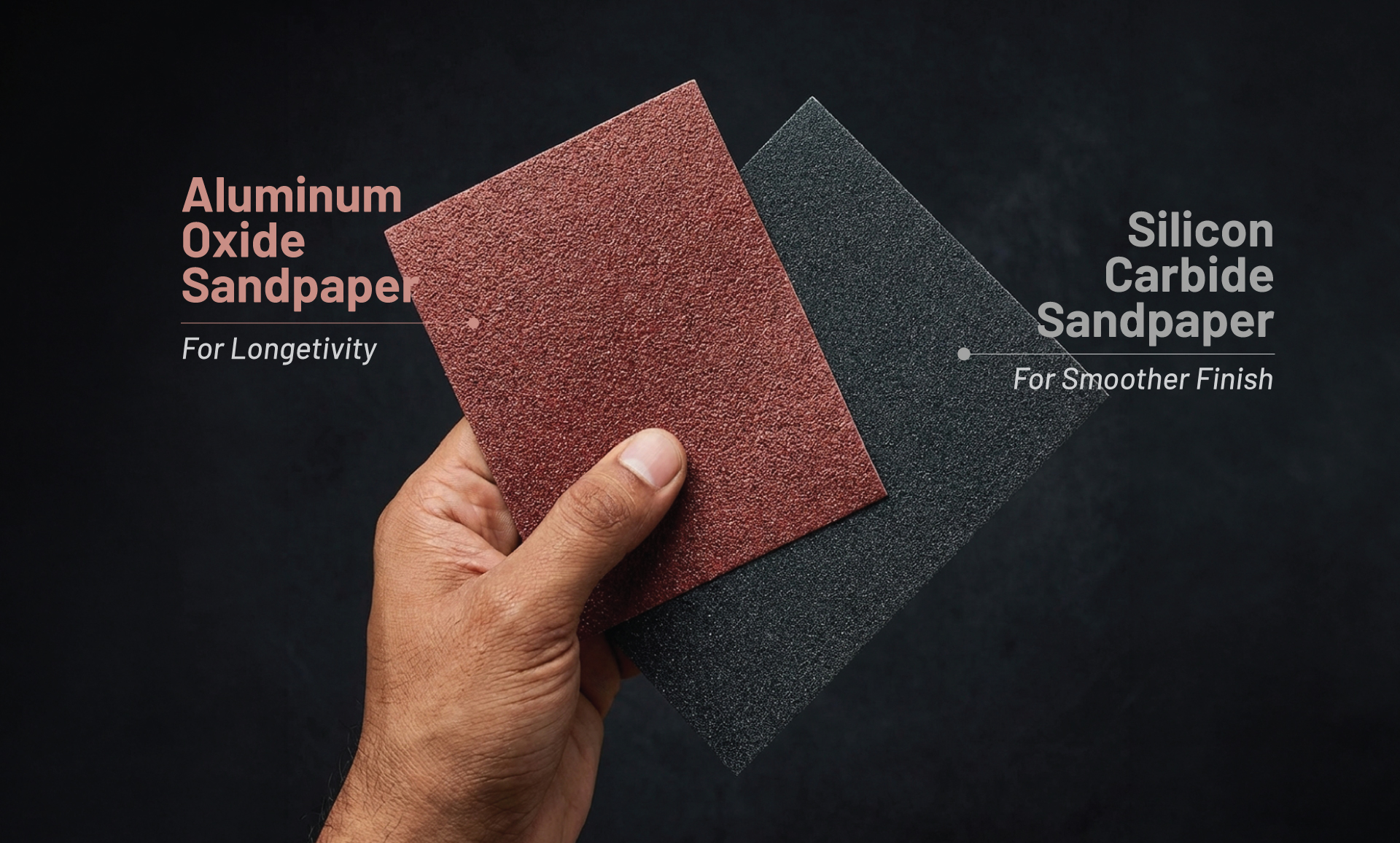
The abrasive material used in sandpaper determines how efficiently it removes material, how long it lasts, and the type of surface finish it produces. Aluminum oxide and silicon carbide are two of the most widely used abrasive materials in modern sandpapers, but they behave very differently during sanding.
Aluminum oxide abrasives are designed for durability and long service life. Silicon carbide abrasives are sharper and cut more aggressively, producing finer surface finishes. Selecting the correct abrasive helps ensure faster sanding, consistent surface preparation, and better finishing results.
Understanding how these two abrasives differ allows users to choose sandpaper that matches the material being sanded and the stage of the finishing process.
Aluminum Oxide Sandpaper: Characteristics and Typical Applications
Aluminum oxide sandpaper uses abrasive grains made from aluminum oxide, a synthetic abrasive material known for its toughness and durability. During sanding, aluminum oxide grains gradually fracture, exposing fresh cutting edges that help maintain cutting performance.
This self-renewing behavior allows aluminum oxide sandpaper to remain effective over longer sanding periods compared to many other abrasive materials.
Because of this durability, aluminum oxide sandpaper is commonly used for general-purpose sanding tasks, particularly in woodworking and furniture restoration.
Typical applications include the following:
sanding wooden furniture surfaces
preparing wood before painting or staining
removing varnish or paint coatings
sanding metal or painted surfaces
general workshop sanding operations
For many woodworking tasks, aluminum oxide abrasives provide a reliable balance between cutting performance and abrasive life.
Silicon Carbide Sandpaper: Cutting Behavior and Finishing Uses
Silicon carbide sandpaper uses abrasive grains made from silicon carbide, an extremely hard and sharp synthetic abrasive material. These grains cut quickly and produce a fine, uniform scratch pattern during sanding.
Unlike aluminum oxide, silicon carbide abrasives tend to break down more quickly during use. However, their sharp cutting edges make them particularly useful for finishing and polishing applications.
Silicon carbide sandpaper is commonly used when very smooth surfaces are required or when sanding harder materials.
Typical uses include the following:
sanding between coats of paint or varnish
finishing automotive surfaces
sanding plastics and fiberglass
polishing metal surfaces
wet sanding operations
Because silicon carbide abrasives produce finer scratches, they are often used in the final stages of surface preparation.
Applications Where Aluminum Oxide Sandpaper Performs Best
Aluminum oxide sandpaper is best suited for applications that require durability and consistent cutting performance. Its ability to maintain cutting efficiency makes it ideal for sanding operations that involve larger surfaces or longer sanding sessions.
Common applications include:
sanding wooden furniture
preparing wood before painting or staining
removing old coatings and varnish
general woodworking surface preparation
sanding metal and painted surfaces
In furniture restoration projects, aluminum oxide sandpaper is often used in the initial sanding stages because it removes coatings efficiently while maintaining abrasive durability.
Applications Where Silicon Carbide Sandpaper Is Preferred
Silicon carbide sandpaper is commonly used in finishing stages where smooth surfaces are required. Its sharp abrasive grains produce fine scratch patterns that help improve surface quality before coatings or polishing.
Typical applications include the following:
sanding between coats of paint or lacquer
polishing metal surfaces
finishing automotive coatings
sanding fiberglass and plastics
wet sanding applications
Because silicon carbide abrasives cut very cleanly, they are frequently used in finishing processes where surface smoothness is important.
Choosing the Right Abrasive for Wood Sanding
For most woodworking applications, aluminum oxide sandpaper provides the best balance between durability and cutting performance. Wood sanding often involves multiple sanding passes, and aluminum oxide abrasives maintain cutting efficiency during longer sanding operations.
Silicon carbide sandpaper may still be used in finishing stages or when sanding between coats of varnish or lacquer.
For furniture refinishing workflows, aluminum oxide sandpaper is typically used for the initial sanding stages, while silicon carbide sandpaper may be used during final finishing.
Using Multiple Abrasive Types in a Sanding Workflow
Many sanding processes use both aluminum oxide and silicon carbide abrasives at different stages of surface preparation. Each abrasive material provides specific advantages depending on the sanding objective.
For example:
aluminum oxide sandpaper may be used for initial surface sanding and coating removal
silicon carbide sandpaper may be used for finishing and polishing stages
Combining both abrasives allows users to balance sanding efficiency with surface smoothness.
Typical Sanding Workflow Using Aluminum Oxide and Silicon Carbide
Many sanding processes combine different abrasive materials at different stages to balance material removal and surface finish quality.
A typical workflow in woodworking or furniture refinishing follows this sequence:
Surface Preparation Steps
- Initial Sanding – Coarse Grit (Aluminum Oxide)
- Removes old coatings and evens out the surface.
- Intermediate Sanding – Medium Grit (Aluminum Oxide)
- Smooths the surface and gets rid of scratches.
- Final Finishing – Fine Grit (Silicon Carbide)
- Creates a very smooth surface ready for the next step.
- Ready for Paint, Stain, or Polish
- The surface is now fully prepared for finishing.
Factors to Consider When Selecting Sandpaper Abrasives
Selecting the correct abrasive material depends on three primary factors: the material being sanded, the stage of the sanding process, and the desired surface finish.
Aluminum oxide sandpaper is generally preferred for general-purpose sanding tasks because it offers durability and consistent cutting performance.
Silicon carbide sandpaper is better suited for finishing stages or for sanding harder materials where smoother surfaces are required.
Choosing the appropriate abrasive material helps ensure efficient sanding, improved surface preparation, and better finishing results.
Quick Comparison Summary
Feature | Aluminum Oxide Sandpaper | Silicon Carbide Sandpaper |
Durability | High | Moderate |
Cutting behavior | Stable cutting | Very sharp cutting |
Surface finish | Standard finish | Very smooth finish |
Typical use | Wood sanding, surface preparation | Finishing, polishing |
Both abrasive materials play important roles in sanding operations, and selecting the correct one depends on the sanding stage and the material being processed.
About the Author
This article was prepared by the CUMI Abrasives technical team, part of Carborundum Universal Limited, a materials engineering company within the Murugappa Group. With decades of experience in abrasive manufacturing and surface preparation technologies, the team works with industries including metalworking, automotive manufacturing, woodworking, and industrial finishing.
The insights presented in this article are based on practical applications of abrasive materials used in both workshop environments and industrial surface preparation processes.
Frequently Asked Questions
1. What is the difference between aluminum oxide and silicon carbide sandpaper?
Aluminum oxide sandpaper is durable and ideal for general-purpose sanding, providing stable cutting performance over long periods. Silicon carbide sandpaper, on the other hand, is sharper, cuts faster, and is perfect for finishing, polishing, and wet sanding tasks where a very smooth surface finish is needed.
2. When should I use aluminum oxide sandpaper in woodworking?
Aluminum oxide sandpaper is best used during the initial stages of wood sanding, such as preparing wooden surfaces, removing old varnish, and smoothing rough wood. Its durability makes it ideal for longer sanding sessions and general surface preparation.
3. What are the best applications for silicon carbide sandpaper?
Silicon carbide sandpaper is most effective for finishing and polishing applications. Common uses include sanding between coats of paint or varnish, polishing metals, finishing automotive surfaces, and wet sanding plastics or fiberglass.
4. Can I use both aluminum oxide and silicon carbide sandpaper in a single sanding workflow?
Yes! Many sanding workflows combine both abrasives for optimal results. Typically, aluminum oxide is used for initial sanding and coating removal, while silicon carbide is used for final finishing and polishing, ensuring smooth surfaces ready for painting, staining, or polishing.
5. How do I choose the right sandpaper for my project?
Choosing the right sandpaper depends on the material being sanded, the sanding stage, and the desired surface finish. Use aluminum oxide for general-purpose sanding and durability and silicon carbide for finishing harder materials or very smooth surfaces. Proper selection improves sanding efficiency and finishing results.