

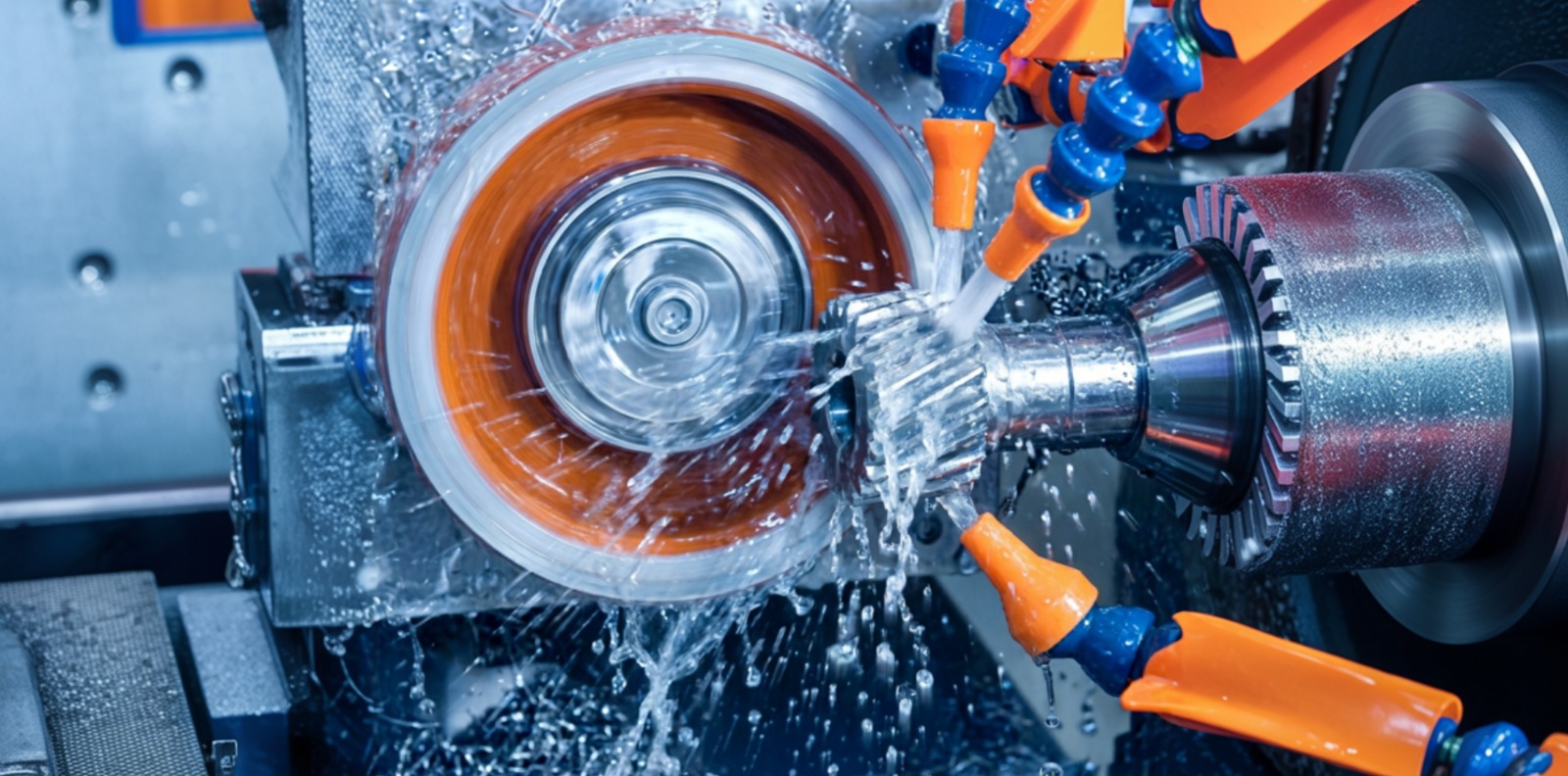
Reduce heat-heavy grinding operations is essential in industries such as steel, foundry, forging, automotive components, and fabrication, where high material removal is required. However, excessive heat during grinding can cause burn marks, surface cracks, loss of hardness, and premature grinding wheel wear. Understanding how to control heat is critical for both component quality and operator safety.
Why Heat Builds Up During Grinding
Heat generation during grinding is influenced by several factors:
- Incorrect grinding wheel selection
- Excessive grinding pressure
- Improper wheel speed or feed rate
- Inadequate coolant application
- Worn or glazed grinding wheels
When heat is not controlled, it leads to thermal damage to components and reduces the effective life of grinding wheels.
Choosing the Right Grinding Wheel to Control Heat
- Vitrified Grinding Wheels
Vitrified grinding wheels offer excellent heat resistance and form retention, making them ideal for centerless grinding, cylindrical grinding, roll grinding, and bearing applications. Their porous structure allows better coolant penetration and heat dissipation. - Resinoid Grinding Wheels
Resinoid grinding wheels provide flexibility and shock resistance, suitable for heavy stock removal and cutting operations. Selecting the correct grade and grit helps reduce friction and overheating.
Using application-specific wheels minimizes grinding burns and improves surface finish.
Best Practices: How to Reduce Heat, Burns & Wheel Wear During Heavy Grinding Operations
- Use the correct grit size
Coarser grits remove material faster with less heat buildup, while finer grits should be used only for finishing. - Maintain proper wheel speed (RPM)
Always operate within the wheel’s maximum operating speed (MOS) to avoid excess heat and safety risks. - Avoid excessive pressure
Let the abrasive grains cut naturally. Excess force increases friction, heat, and wheel wear. - Dress grinding wheels regularly
Proper dressing keeps the wheel sharp, prevents glazing, and restores cutting efficiency. - Apply coolant effectively
Coolant helps control temperature, flush away swarf, and extend wheel life—especially in precision grinding.
Productivity Benefits of Heat Control
By reducing heat and wheel wear, operators achieve:
- Longer grinding wheel life
- Improved surface finish
- Reduced rework and scrap
- Consistent dimensional accuracy
- Lower overall grinding cost
Correct grinding practices directly improve productivity and safety in heavy-duty operations.
FAQs – Grinding Heat & Wheel Wear
1. What causes grinding burn on metal surfaces?
Grinding burn is caused by excessive heat due to incorrect wheel selection, high pressure, or improper speed.
2. How can wheel wear be reduced in heavy grinding?
Using the correct grit, bond type, regular dressing, and proper coolant application helps reduce wheel wear.
3. Are vitrified grinding wheels better for heat control?
Yes, vitrified wheels dissipate heat more effectively and are ideal for precision and continuous grinding.
4. Does higher pressure increase grinding speed?
No. Excessive pressure increases heat and wear without improving productivity.
5. Which industries must control grinding heat strictly?
Industries such as steel, automotive components, bearings, and foundry operations require strict heat control.