

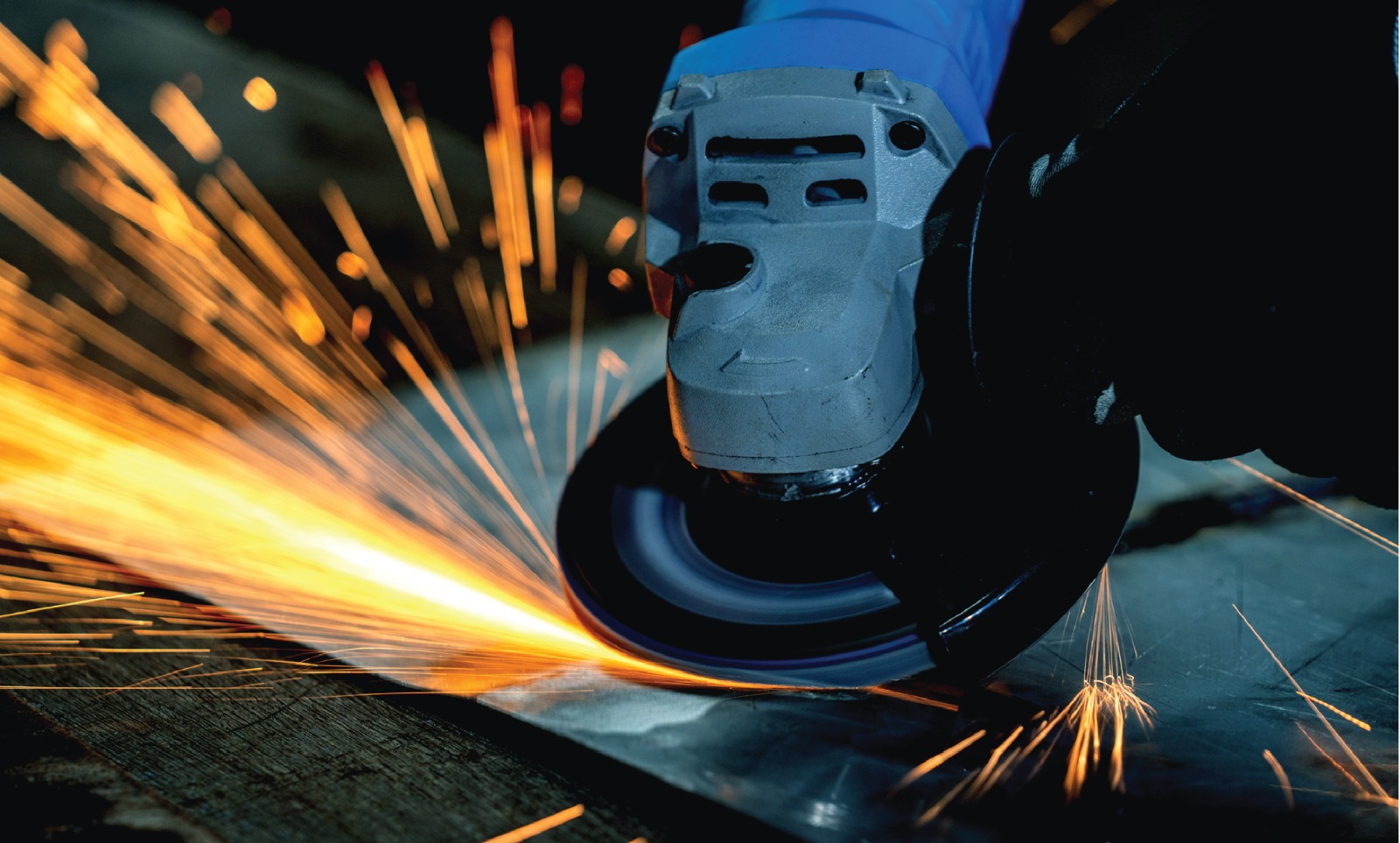
Metal fabrication often requires both material removal and surface finishing. Using multiple abrasive tools for these tasks can increase process time and tool changes. A flap disc simplifies this process by combining grinding and finishing in a single tool.
Understanding how to use a flap disc correctly helps improve surface quality, maintain control during grinding, and achieve more consistent finishing results on metal surfaces.
What Is a Flap Disc?
Flap discs are commonly used in metal fabrication and finishing applications involving:
- Mild steel components
- Stainless steel parts
- Welded assemblies
- Fabricated metal structures
- Sheet metal components
- Surface preparation before finishing or coating
They are widely used in fabrication workshops, maintenance operations, and metal finishing applications.
When Should You Use a Flap Disc?
A flap disc is suitable when both grinding and finishing are required on the same workpiece.
Typical applications include the following:
- Removing weld seams
- Deburring metal edges
- Surface blending
- Removing rust and scale
- Preparing surfaces before coating or painting
- Achieving smoother surface finishes
Because flap discs generate relatively lower vibration and provide better control than some traditional grinding methods, they are often preferred for finishing-sensitive applications.
How Does a Flap Disc Work?
A flap disc removes material through abrasive grains bonded to multiple overlapping flaps. During operation, worn abrasive layers gradually expose fresh abrasive surfaces, maintaining cutting efficiency.
This self-renewing action helps:
- Maintain consistent grinding performance
- Reduce loading of abrasive surfaces
- Improve finish quality
- Minimise frequent disc replacement
The flexible flap construction also allows the disc to adapt to contours and irregular surfaces.
How to Use a Flap Disc for Metal Grinding and Finishing
Step 1: Select the Right Flap Disc
Choose the flap disc based on the following:
- Metal type
- Amount of material removal required
- Desired surface finish
- Operating speed of the angle grinder
Selecting the appropriate abrasive and grit helps improve both productivity and finish consistency.
Step 2: Inspect the Disc Before Use
Before installation:
- Check for visible damage
- Verify the disc is suitable for the grinder speed
- Ensure the backing plate is intact
- Confirm the disc is properly secured
Damaged abrasive discs should never be used.
Step 3: Position the Grinder Correctly
For grinding applications, hold the flap disc at an angle of approximately 15° to 30° relative to the work surface.
Maintaining the proper angle helps:
- Improve material removal efficiency
- Prevent excessive heat generation
- Reduce uneven wear
- Produce a more uniform finish
Step 4: Apply Moderate Pressure
Allow the abrasive to perform the cutting action.
Excessive pressure may:
- Generate excess heat
- Reduce abrasive life
- Increase operator fatigue
- Produce inconsistent surface finishes
Controlled pressure usually delivers better finishing results and longer disc life.
Step 5: Keep the Tool Moving
Move the grinder continuously across the work surface using smooth, overlapping strokes.
Continuous movement helps:
- Avoid surface gouging
- Prevent overheating
- Produce a more even finish
- Improve blending consistency
Step 6: Inspect the Surface Regularly
Periodically stop and inspect the workpiece.
This allows operators to:
- Monitor material removal
- Verify finish requirements
- Prevent over-grinding
- Adjust technique if necessary
Regular inspection is particularly important during finishing operations where surface appearance is critical.
Which Grit Should Be Used for Metal Grinding and Finishing?
The grit size determines how aggressively the flap disc cuts and the quality of the final surface finish.
Grit Range | Result | Typical Application |
40–60 | Aggressive material removal | Weld removal and heavy grinding |
80 | Medium grinding | Edge blending and deburring |
120 | Fine finishing | Surface preparation before coating |
180 and above | Smooth finishing | Fine surface finishing and polishing preparation |
Selecting the appropriate grit progression can improve efficiency while reducing the need for additional finishing steps.
Common Mistakes to Avoid When Using a Flap Disc
Using Excessive Pressure
Applying excessive force increases heat generation and accelerates abrasive wear.
Using the Wrong Grit
Very coarse grits may leave deep scratches, while very fine grits may slow material removal.
Holding the Disc at an Incorrect Angle
Incorrect positioning can reduce cutting efficiency and create uneven surfaces.
Staying in One Spot for Too Long
Keeping the grinder stationary can cause overheating and surface damage.
Using a Worn or Damaged Disc
Damaged abrasive discs may compromise performance and operator safety.
What Are the Benefits of Using a Flap Disc for Metal Finishing?
Using a flap disc for metal applications offers several advantages:
- Combines grinding and finishing in one tool
- Produces smoother surface finishes
- Maintains consistent cutting action
- Provides better control on contoured surfaces
- Reduces tool changes during fabrication processes
- Supports efficient weld blending and deburring operations
These characteristics make flap discs suitable for a wide range of metal fabrication and finishing applications.
How Are Flap Discs Supporting Industry 4.0 and Modern Fabrication Operations?
Metal fabrication environments are increasingly adopting automation, digital quality controls, and data-driven production practices. In these environments, consistency and process efficiency are becoming as important as material removal performance.
Flap discs are increasingly viewed as contributors to operational efficiency because they can perform both grinding and finishing activities using a single abrasive tool. This can help simplify workflows and support more predictable processing outcomes.
Selecting the appropriate flap disc can help fabrication operations:
- Reduce rework caused by inconsistent surface finishes
- Improve process repeatability across production batches
- Minimise interruptions associated with frequent abrasive changes
- Support more efficient utilisation of equipment and labour
- Contribute to higher productivity and more consistent finishing quality
For fabrication shop owners, these improvements can support higher throughput and more efficient operations. For plant managers and production teams, consistent grinding and finishing processes can contribute to broader manufacturing objectives such as process stability, quality improvement, and efficient resource utilization.
As manufacturing environments continue to evolve toward Industry 4.0 practices, abrasive selection is increasingly becoming an important contributor to achieving reliable and efficient fabrication performance.
Conclusion
A flap disc can be an effective solution for both metal grinding and finishing when used correctly. Selecting the right grit, maintaining proper grinding angles, applying moderate pressure, and using controlled movements can improve surface quality and abrasive performance.
For metal fabrication processes that require efficient grinding, deburring, weld blending, and finishing, flap discs provide a practical approach to achieving consistent and reliable surface preparation results.