
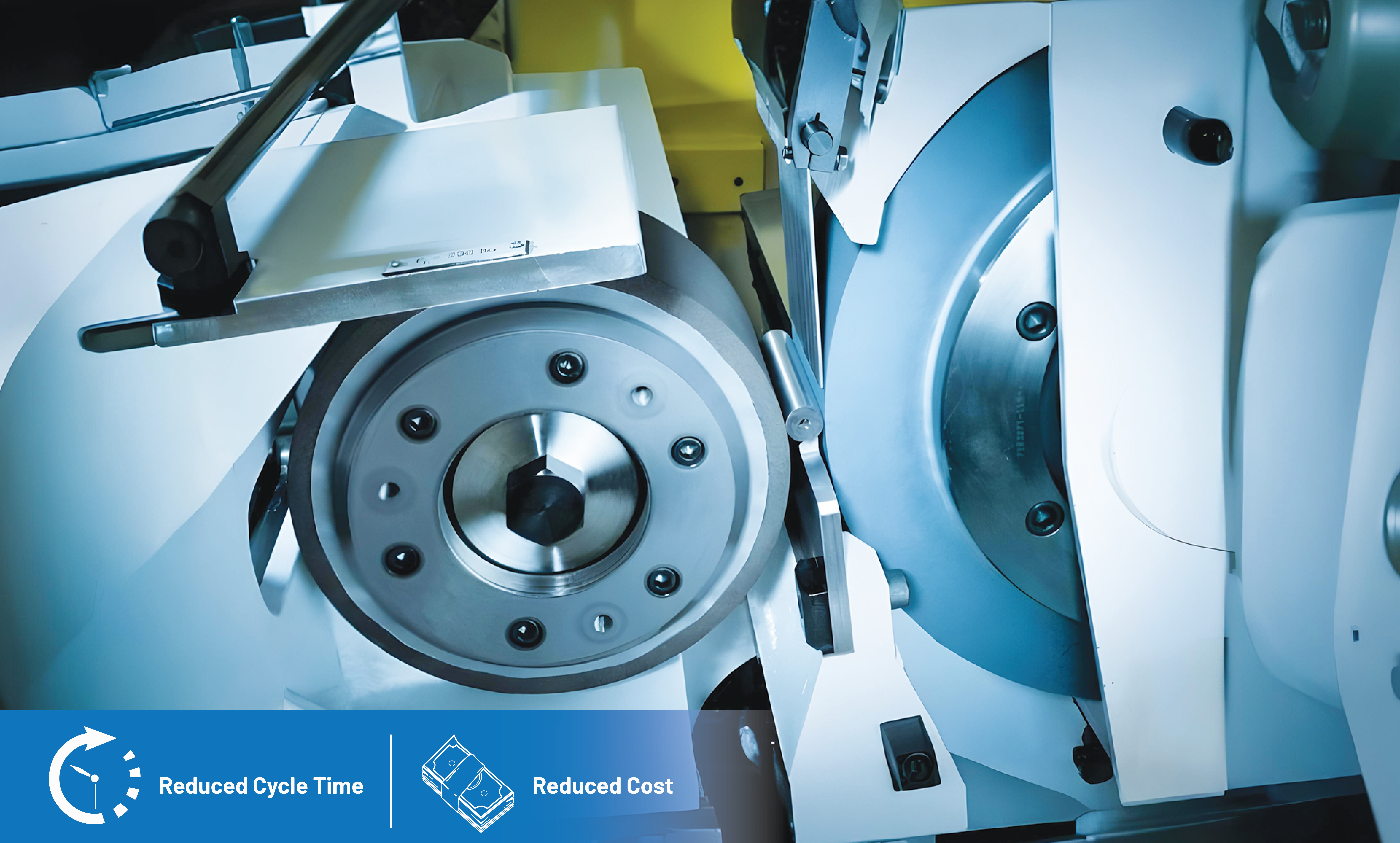
In industrial grinding operations, abrasives are not just consumables—they are productivity enablers. The right abrasive selection can significantly reduce cycle time, downtime, and cost per component, while the wrong choice quietly increases operational costs across production lines.
This blog explains how abrasive choice directly impacts cycle time and total grinding cost and why leading manufacturers treat abrasive selection as a process optimization decision, not a purchase decision.
Why Abrasive Selection Is Critical in Industrial Grinding
In sectors such as automotive, aerospace, bearings, general engineering, and metal fabrication, grinding efficiency is measured by:
- Parts produced per shift
- Consistent dimensional accuracy
- Surface finish quality
- Machine uptime
- Cost per finished component
Abrasives influence all of these metrics simultaneously.
Poor abrasive selection often results in:
- Longer grinding cycles
- Frequent wheel or belt changes
- Excessive dressing
- Higher scrap and rework rates
Understanding Cycle Time in Grinding Operations
Cycle time in grinding is not just the time the wheel contacts the workpiece. It includes:
- Actual grinding time
- Wheel dressing time
- Tool changeover time
- Inspection and rework time
Even a 5–10 second reduction per component can translate into significant cost savings in high-volume manufacturing.
Abrasive Type and Material Removal Rate (MRR)
Different abrasives exhibit varying cutting behaviors, which directly influence the material removal rate (MRR) and overall grinding efficiency. The right abrasive selection enables faster cutting action, controlled heat generation, and consistent performance throughout the grinding cycle.
High-performance abrasives are designed to maintain sharp cutting edges for longer periods, allowing efficient penetration into the workpiece. This results in:
- Faster stock removal
- Fewer grinding passes per component
- Lower grinding forces
- Reduced thermal stress
Result: Shorter grinding cycles with consistent output.
Grit Size Selection and Grinding Efficiency
How Grit Size Impacts Productivity
- Coarse grit → Faster stock removal, rougher finish
- Fine grit → Less Burn Marks
Using the wrong grit leads to:
- Additional grinding passes
- Extra finishing operations
- Increased inspection failures
Best Practice
- Use coarse grits for rough grinding
- Use optimised intermediate grits to minimise finishing time
- Avoid jumping directly from coarse to very fine grits
Correct grit progression directly reduces cycle time and energy consumption.
Abrasive Wear Rate and Tool Change Frequency
Every wheel or belt change causes:
- Machine stoppage
- Operator intervention
- Setup inconsistencies
High-performance abrasives:
- Retain sharp cutting edges longer.
- Require fewer dressings
- Maintain stable grinding behavior.
Cost impact:
- Reduced downtime
- Higher machine utilisation
- Lower labour involvement
Heat Generation, Surface Integrity, and Rework Costs
Excessive heat during grinding can cause:
- Grinding burns
- Micro-cracks
- Metallurgical damage
These defects often result in:
- Rejected components
- Regrinding
- Customer quality issues
Advanced abrasives:
- Cut cooler
- Reduce thermal stress.
- Protect surface integrity
Result: Lower scrap rates and reduced quality-related costs.
Dressing Frequency and Its Hidden Cost Impact
While dressing is necessary, excessive dressing:
- Shortens abrasive life
- Interrupts production
- Increases consumable cost
Optimized abrasives:
- Hold the form longer.
- Maintain cutting efficiency.
- Reduce dressing frequency
This translates into more productive grinding time per shift.
Total Cost of Ownership: Looking Beyond Abrasive Price
Focusing only on the abrasive unit price often leads to poor decisions.
True Cost Factors Include:
- Abrasive cost
- Grinding time per component
- Tool life
- Dressing frequency
- Energy consumption
- Scrap and rework
In many cases, premium abrasives reduce overall cost, even if their upfront price is higher.
How Industrial Manufacturers Optimise Abrasive Selection
Leading plants:
- Match abrasive type to material hardness.
- Measure cost per component, not cost per wheel.
- Conduct controlled trials before standardization.
This approach delivers predictable performance and long-term savings.
Final Thoughts
Abrasive choice has a direct, measurable impact on cycle time, productivity, and manufacturing cost. Selecting the right abrasive is not just a technical decision—it is a strategic operational choice.
By focusing on performance, durability, and process efficiency, manufacturers can significantly improve throughput while reducing total grinding cost.
Frequently Asked Questions (FAQs)
1) How does abrasive choice affect grinding cycle time?
High-performance abrasives remove material faster, reduce dressing frequency, and shorten grinding cycles.
2) Do premium abrasives really reduce total grinding cost?
Yes. While premium abrasives may cost more initially, they often reduce downtime, tool changes, and rework, lowering total cost per component.
3) What role does grit size play in grinding efficiency?
Grit size controls material removal rate and surface finish. Correct grit selection minimizes passes and finishing time.
4) Why does abrasive wear rate matter in industrial grinding?
Lower wear rates mean fewer tool changes, higher machine uptime, and consistent grinding performance.
5) How should manufacturers evaluate abrasive performance?
By running controlled trials and measuring productivity, tool life, and cost per finished component.