India 
India


Information Material:
| Type | Operation | Speed | Good | Better | Best |
|---|---|---|---|---|---|
| Outer Diameter - Taper Roller | Rough | 35 | A80 L RT1 | A80 L RT3 | 65A801 L RT1 |
| 50 | - | A80 L RT45 | 65A801 L RT45 | ||
| 35 | - | A80 MRT3 | - | ||
| 50 | - | 5SBA60 K5 V50 | For >1.5” roller | ||
| Finish | 35 |
A100 M RT1; A120 L RT1 |
A120 M RT1 | 65A100 M RT1 | |
| 50 | - |
5SA80 K5 V50 DA80 J5 V2020/50 |
For >1.5" roller | ||
| Fine Finish | 35 | - | - | DA400 H7 RBCX | |
| 50 | - | - | DA500 H7 RBCX | ||
| Outer Diameter - Cylindrical Rollers | Rough | 35 | AA60 K5 V8 | 53A60 J7 VC500 | 1CUMISA60 J6 VCAE |
| 50 | AA60 K5 V50 | 53A60 J7 VC500/50 | 1CUMISA60 J6 VC500/50 | ||
| Finish | 35 | AA80 K5 V8 | 53A80 J7 VC500 | 1CUMISA80 J6 VCAE | |
| 50 | AA80 K5 V50 | 53A80 J7 VC500/50 | 1CUMISA80 J6 VC500/50 | ||
| Needle Roller | Rough | 35 | - | - | GC120 M5 VG |
| 50 | - | - | GC120 M5 VG/50 | ||
| Finish | 35 | A120 L RT1 | A120 M RT1 | GC1201 N5 VS2110M/50 |
| CUMI Code | Grit Range | Diameter | Thickness | Hardness | Structure | Speed | ||
| (mm) | (Inch) | (mm) | (Inch) | (mps) | ||||
| CUMISA | 46 - 120 | 350 - 610 | 14 - 24 | 100 - 250 | 4 - 10 | I - N | 6 & 8 | 35, 50 & 63 |
| 50A / 50MA | 46 - 120 | I - N | 7 | 35 & 50 | ||||
| 65A | 80 - 220 | L | - | 40 | ||||
| SA | 46 - 120 | I - N | 5 - 7 | 35 & 50 | ||||
| 9A | 46 - 120 | I - P | 5 - 7 | 35 & 50 | ||||
| SBA | 46 - 120 | I - P | 5 - 7 | 35 & 50 | ||||
| AA | 46 - 120 | I - P | 5 - 7 | 35 & 50 | ||||
| DA | 46 - 120 | 100 - 300 | 4 - 12 | I - P | 5 - 7 | 35 & 50 | ||
| A | 46 - 120 | I - P | 5 - 7 | 35 & 50 | ||||
| C | 46 - 120 | I - N | 5 - 7 | 35 & 50 | ||||
| GC | 46 - 120 | I - N | 5 - 7 | 35 & 50 | ||||
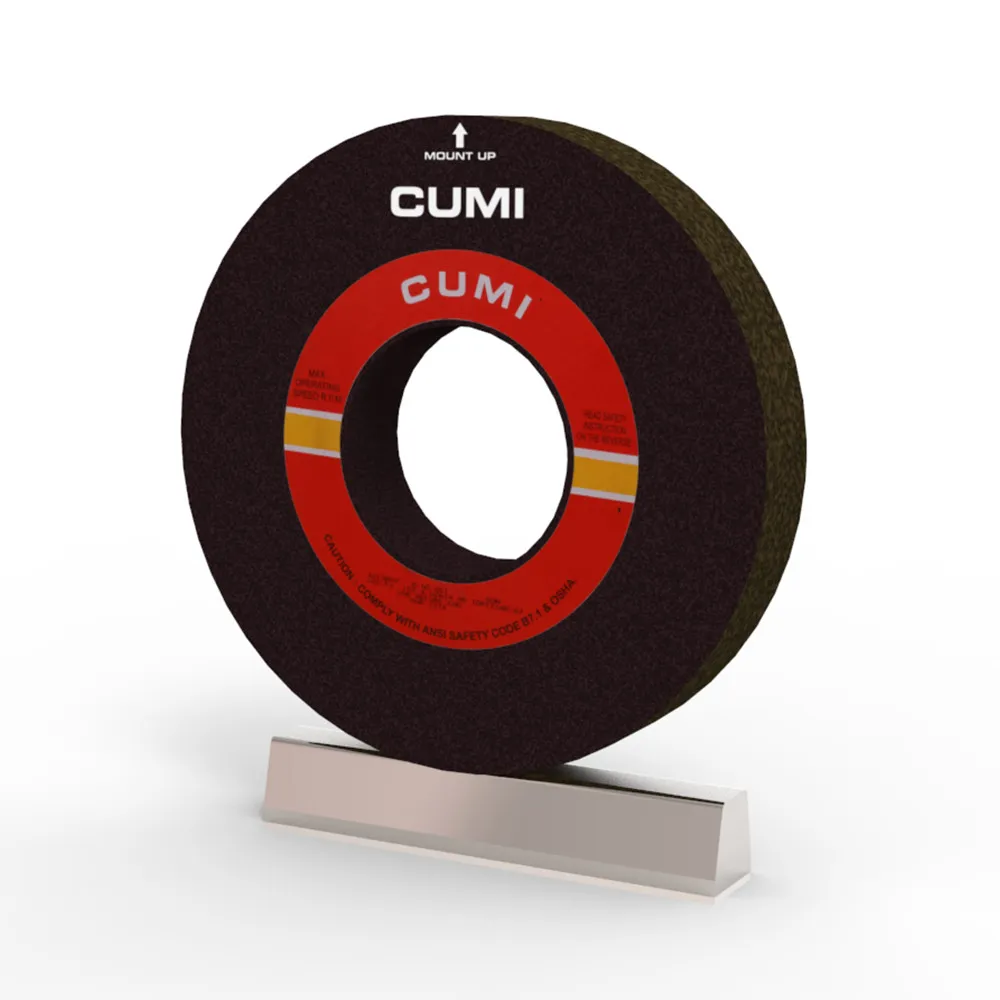
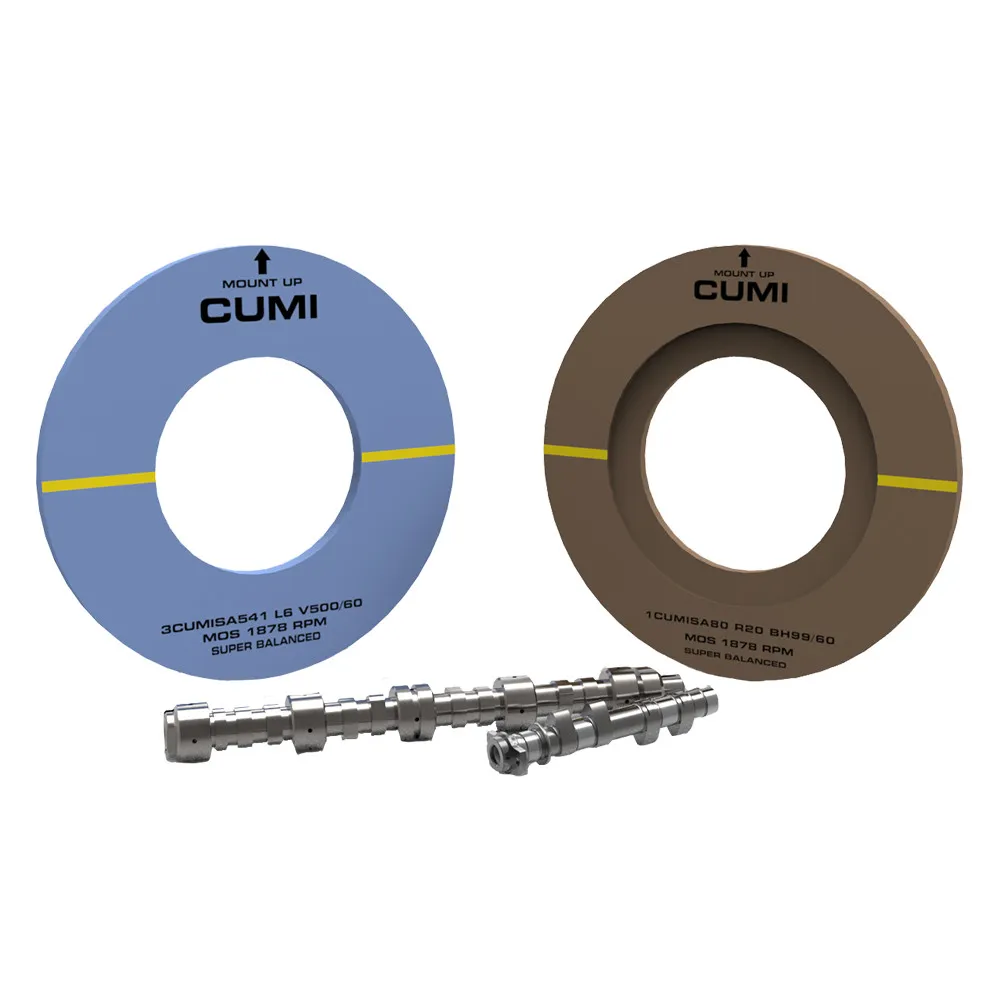
CUMI Cylindrical Grinding Wheels are designed to handle a wide range of external cylindrical grinding operations where size accuracy, surface finish, and productivity are critical. Manufactured using the optimal selection of abrasive grain types, these wheels deliver high stock removal rates while maintaining excellent form retention throughout the grinding cycle.
CUMI offers customized wheel sketches tailored to specific customer requirements, including wheels for multiple diameters and shoulder grinding with pre-formed wheel faces. A wide range of bond systems—vitrified, resin, and specialized formulations—allows precise matching of the wheel to individual grinding conditions and materials.
CUMI cylindrical grinding wheels are widely used for grinding valves, plunger pins, eye bolts, transmission shafts, camshafts, and crankshafts, making them a dependable solution for precision and high-volume production environments.
Roller Types Explained:
Pricing & Enquiry: For the current price of this product, please contact CUMI directly or reach out to your nearest authorised dealer, as pricing depends on order quantity, dealer location, and applicable taxes. To get a quote or enquire about bulk pricing, visit the Contact Us page on cumiabrasive.in or connect with a CUMI distributor in your region.



Phone Number
Dare House Extension, 4th Floor, 234, NSC Bose Road, Chennai, Tamil Nadu 600001, India
Email Address
Adding {{itemName}} to cart
Added {{itemName}} to cart