

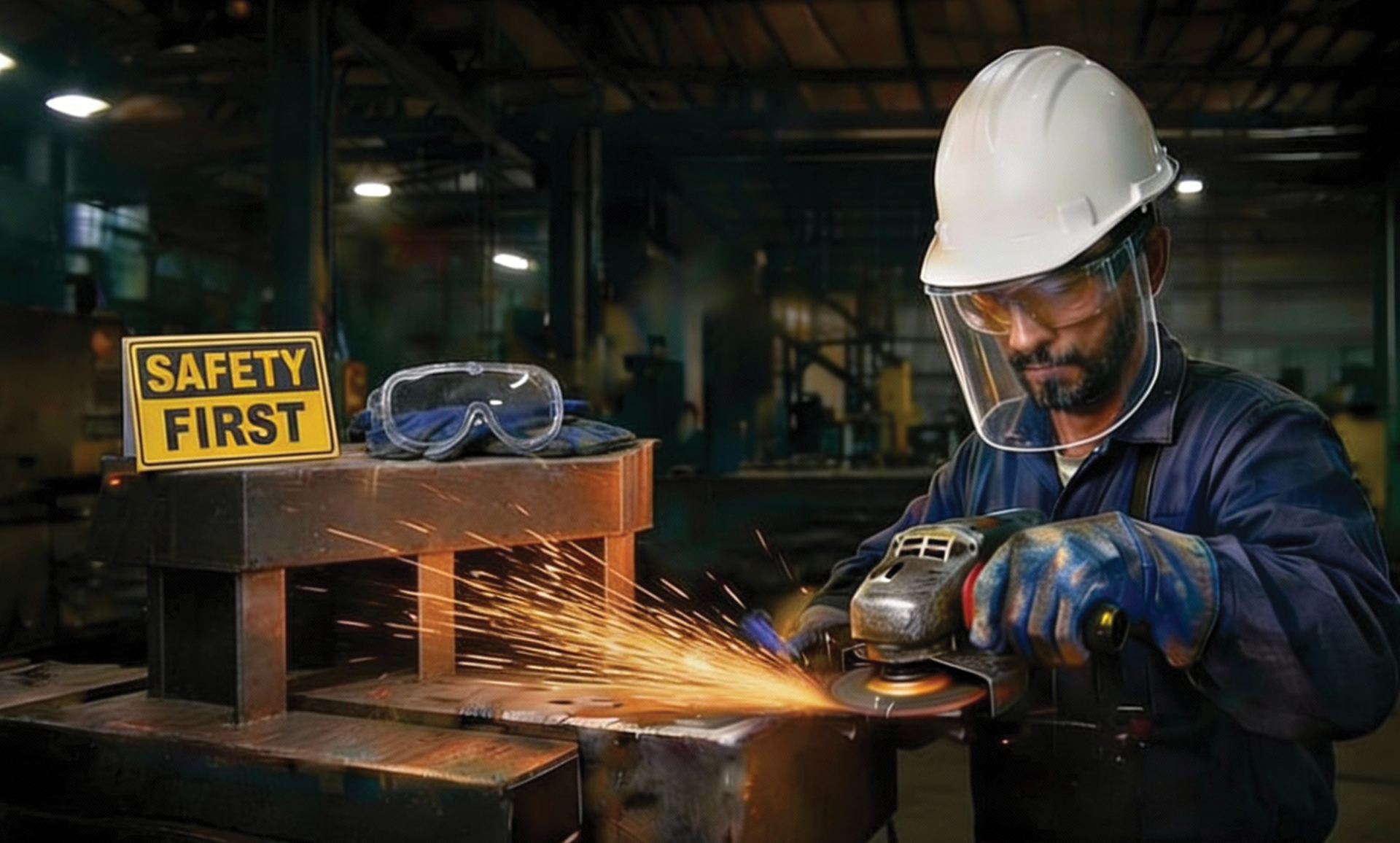
A Beginner’s Guide to Grinding Wheels: Grinding wheelsare essential tools across steel manufacturing, automotive components, bearings, foundry, forging, and fabrication industries. While they deliver high productivity, improper selection or unsafe usage can lead to wheel failure, surface damage, or serious operator injuries. This guide focuses on grinding wheel types, bond systems, and safety fundamentals, helping beginners and operators use grinding wheels safely and effectively.
A Beginner’s Guide to Grinding Wheels: Types, Bonds & Safety Basics
Grinding wheels are selected based on material, application, and machine conditions.
Vitrified Grinding Wheels
Vitrified grinding wheels use a rigid glassy bond that offers excellent form holding, dimensional accuracy, and heat resistance. These wheels are widely used in centerless grinding, cylindrical grinding, bore grinding, and bearing applications where precision and consistent geometry are critical.
Resinoid Grinding Wheels
Resinoid grinding wheels use a resin bond that provides flexibility, shock resistance, and smoother cutting action. They are commonly used in cutting, snagging, pedestal grinding, chop saw operations, and portable grinding, where higher speeds and impact resistance are required.
Selecting the correct wheel type is the first step toward safe grinding.
Grinding Wheel Bonds & Their Role in Safety
The bond determines how abrasive grains are held and released during grinding.
- Vitrified Bond—Rigid, porous, and heat-resistant; ideal for precision grinding and longer cycles
- Resinoid Bond—Tough, flexible, and impact-resistant; ideal for high-speed cutting and heavy stock removal
- Rubber bond—vitrified and resinoid bonds are commonly used for primary and intermediate grinding stages where stock removal, strength, and productivity are required. Once the desired shape and size are achieved, rubber bond wheels are used in the final stage. Rubber bonds provide greater flexibility and control, enabling fine finishing, high dimensional accuracy, and superior surface finish, especially in centerless grinding and control wheel applications.
Using the wrong bond can increase heat, vibration, and the risk of wheel breakage.
Grinding Safety Basics Every Operator Must Follow
Grinding safety depends on both wheel selection and correct operating practices.
- Never exceed the wheel’s maximum operating speed (MOS)
Always match wheel RPM with the machine rating. - Use material-specific grinding wheels
Separate wheels should be used for steel, stainless steel, cast iron, and non-ferrous materials. - Inspect wheels before mounting
Check for cracks, damage, or moisture absorption - Ensure correct mounting and guarding
Use proper flanges, guards, and tool rests as recommended. - Avoid excessive grinding pressure
Let the abrasive cut naturally—excess force increases heat and reduces wheel life.
Following these practices improves safety, finish quality, and productivity.
Where CUMI Grinding Wheels Are Applied
CUMI offers a wide range of vitrified and resinoid grinding wheels for industries such as steel, auto ancillary, bearings, foundry & forging, and cutting tools, supporting applications like centerless grinding, snagging, roll grinding, bore grinding, and cutting operations.
FAQs – Grinding Wheel Safety & Selection
1. What are the safest grinding wheel types for industrial use?
Vitrified grinding wheels are preferred for precision, while resinoid wheels are suitable for high-speed and cutting applications.
2. Can resinoid wheels be used on chop saws and portable grinders?
Yes, resinoid grinding wheels are designed for such high-speed cutting and snagging applications.
3. Why does a grinding wheel overheat?
Overheating usually occurs due to incorrect wheel selection, excessive pressure, or improper speed.
4. How often should grinding wheels be replaced?
Replace wheels when there is excessive wear, vibration, glazing, or visible damage.
5. Which industries must follow strict grinding safety standards?
Industries like steel manufacturing, automotive components, bearings, and foundry operations require strict grinding safety compliance.
If you have questions about choosing the right grinding wheel for your application, our team at Carborundum Universal Ltd. is happy to help. You can reach us at our head office, Dare House Extension, 4th Floor, 234, NSC Bose Road, Chennai – 600 001, by phone at +91 44 3000 6184, or by email at [email protected].